
Evidence
The published evidence.
Ten years of published work, 2017 to 2026: ten peer-reviewed papers, three PhD dissertations and three issued US patents. The results come from four models: mouse, rat, sheep and the human cadaveric cochlea. This page shows them grouped by what they show, with the source under every chart and the papers linked at the bottom.
01
The record
Ten papers, three dissertations and three issued US patents, 2017 to 2026. Hover or focus a marker to read what it found. Under the tiles, the archive counts show the work behind the papers.
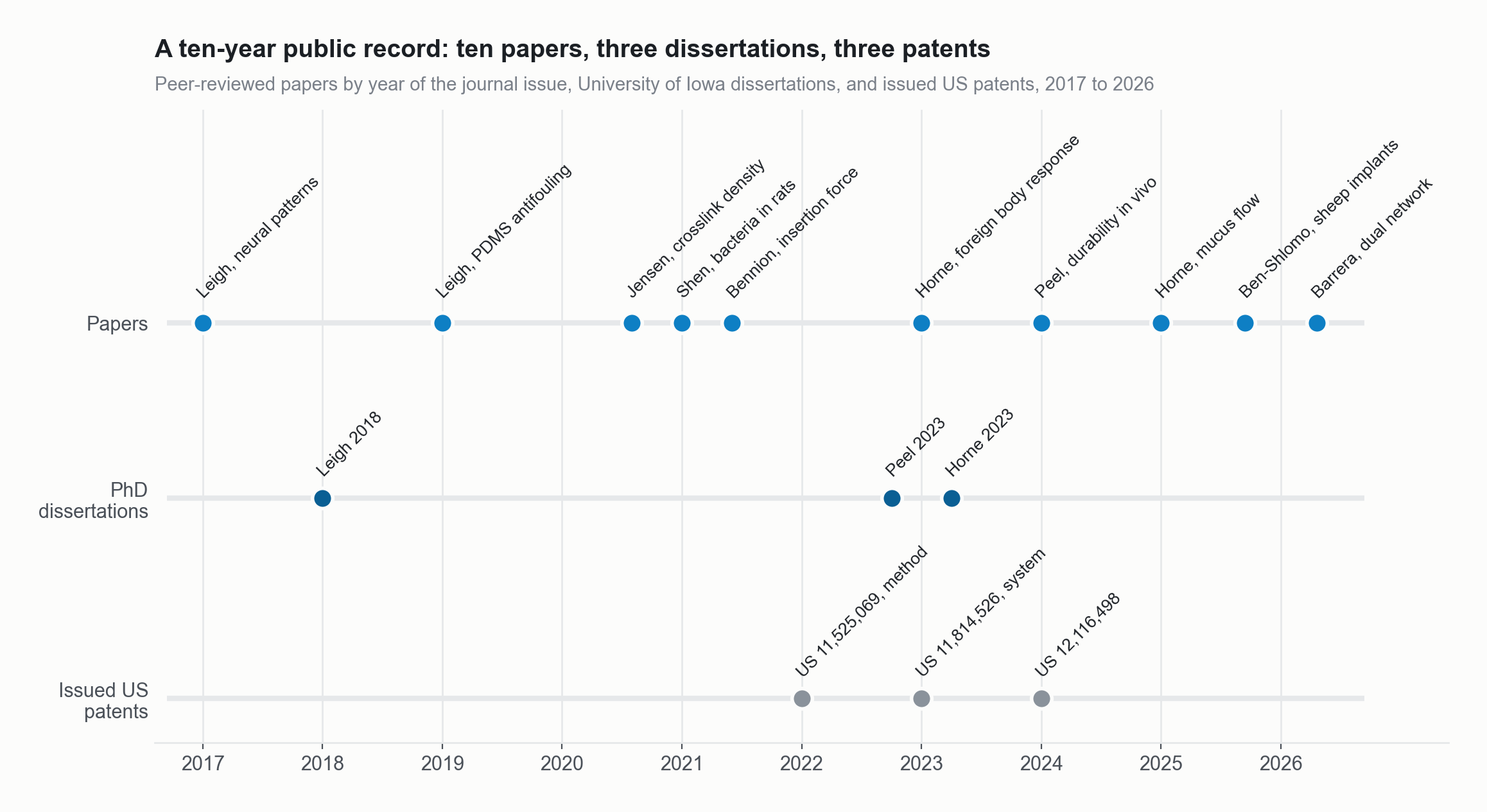
Timeline of the public record, 2017 to 2026: ten peer-reviewed papers, three PhD dissertations and three issued US patents.
Source: Leigh 2017 Biomacromolecules; Leigh 2019 Langmuir; Jensen 2021 ACS Biomaterials Science and Engineering; Shen 2021 ACS Applied Bio Materials; Bennion 2021 Otology and Neurotology; Horne 2023 Acta Biomaterialia; Peel 2024 ACS Applied Bio Materials; Horne 2025 Laryngoscope Investigative Otolaryngology; Ben-Shlomo 2026 Hearing Research; Barrera 2026 ACS Applied Polymer Materials; dissertations Leigh 2018, Peel 2023, Horne 2023 (University of Iowa); US patents 11,525,069 (2022), 11,814,526 (2023), 12,116,498 (2024).
- 10peer-reviewed papers, 2017 to 2026Protein, cells, bacteria and scar all measured, in vitro and in four animal and cadaver models.
- 3PhD dissertations, University of IowaThree doctoral theses underpin the chemistry and the process.
- 3issued US patentsThe photografting method and the coated-device system are protected.
- 7patents granted in five countriesUnited States, Australia, China, Japan and Mexico: the largest device markets.
- 5provisional applications filedFive new inventions filed; national applications pending in Canada, Europe and South Africa.
- 1 yearfilm intact after implantation, miceDurable: the covalent graft outlasts the study and the capsule stays thin.
- 4 weeksfunctional human arrays in sheepWorks on the real device: lower impedance and less inflammation on a working implant.
- ~90%less protein, cell and bacterial adhesion and friction, published bench studiesNothing sticks: the hydration shell turns away protein, cells and bacteria before scar or biofilm can start.
Sources for these numbers
- 10 peer-reviewed papers, 2017 to 2026. Ten papers listed in figures/data/W24_publications.json (DOIs given there).
- 3 PhD dissertations, University of Iowa. Leigh 2018, Peel 2023, Horne 2023 (University of Iowa).
- 3 issued US patents. US 11,525,069 B2 (Dec 13, 2022); US 11,814,526 B2 (Nov 14, 2023); US 12,116,498 B2 (Oct 15, 2024).
- 7 patents granted in five countries. ZCMI patent schedule, 2025 (US 11,525,069; 11,814,526; 12,116,498; AU 2017280359; CN ZL201780049849.X; JP 7005535; MX 388986); Kam Hansen, 2026-10-29.
- 5 provisional applications filed. ZCMI patent schedule, 2025 (US 11,525,069; 11,814,526; 12,116,498; AU 2017280359; CN ZL201780049849.X; JP 7005535; MX 388986); Kam Hansen, 2026-10-29.
- 1 year film intact after implantation, mice. Horne R, et al. Acta Biomaterialia 2023;166:212-223 (Fig 7).
- 4 weeks functional human arrays in sheep. Ben-Shlomo N, et al. Hearing Research 2026;474:109606.
- ~90% less protein, cell and bacterial adhesion and friction, published bench studies. Leigh 2017, Leigh 2019, Jensen 2021, Shen 2021, Horne 2023, Bennion 2021, Peel 2024, Barrera 2026 (see W05; median of the plotted bars is about 94 percent, range about 53 to 99).
And in the archive
- 182experiments with a written reportEvery result traces to a dated report in our archive.
- 1,056adhesion tests on seven substratesDurable: bond strength characterized on silicone, PVC, PEEK, parylene-C and polyurethane.
- 468coated cochlear implant samples scoredRepeatable: a scored process record behind every coated array.
- 136animals with recorded outcomes (mice, rats, sheep)Four models, from bench to a working implant.
- 2,812raw data files archivedTraceable: the raw data sit behind every chart.
- 20scientists and students since 2016Ten years of work across two university labs and the company.
Source: ZwiCoat Data archive counts, 2026-10-29.
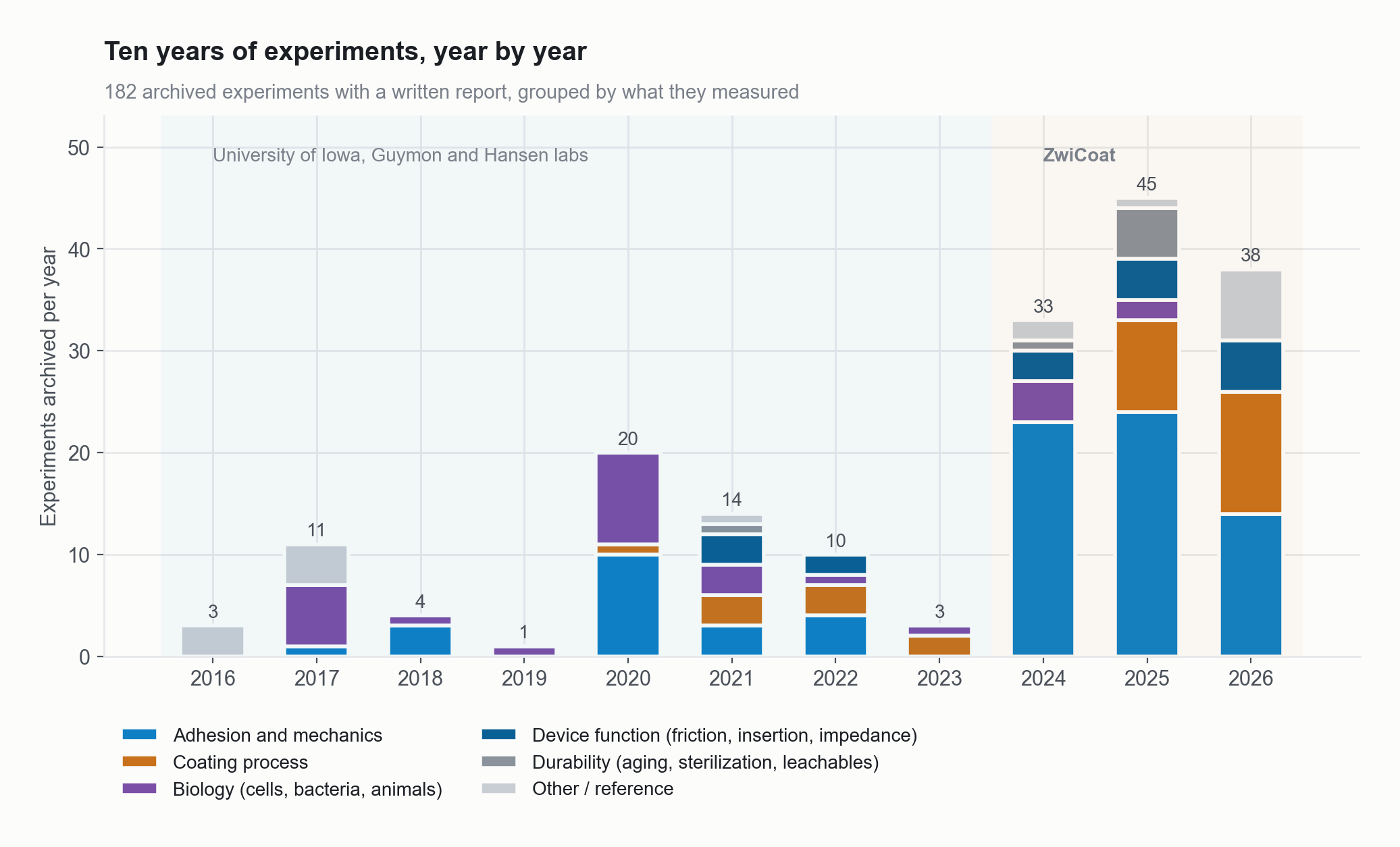
Every experiment in the ZwiCoat archive by year and by what it measured.
Source: ZwiCoat Data archive, E-report method tags (built 2026-10-29).
02
Scar tissue
Capsules were thinner and fibrosis was lower around coated surfaces in mice, rats and sheep. In mice the capsule was 67 percent thinner at six weeks on flat silicone and 62 percent thinner at one year on cochlear implant arrays (Horne 2023). In rats, four coated groups had capsules about 72 to 83 percent thinner at six weeks (Barrera 2026).
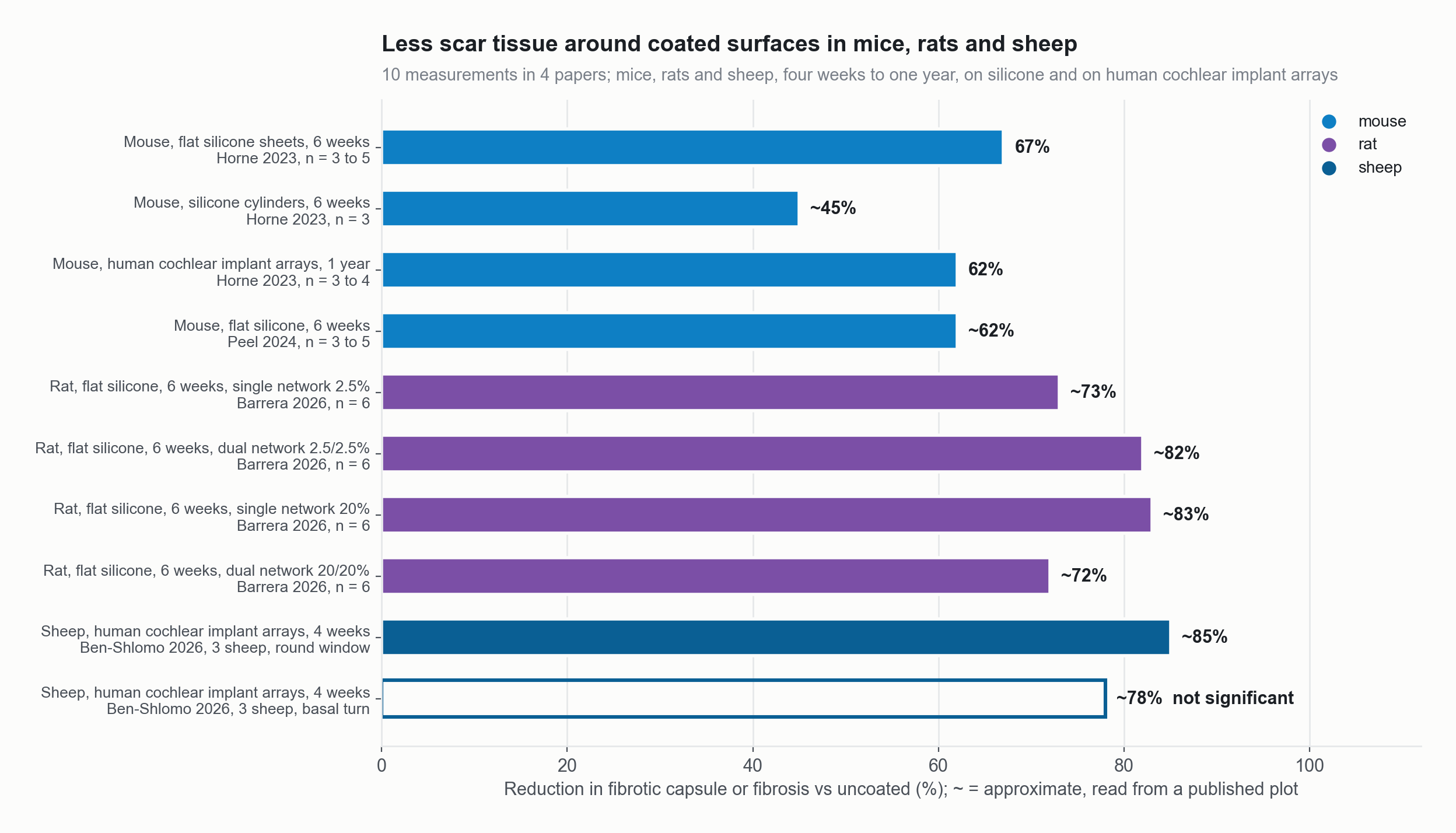
Less scar tissue around coated surfaces in mice, rats and sheep: percent reduction in fibrotic capsule or fibrosis, measurement by measurement. The hollow bar is not statistically significant.
Source: Horne R, et al. Acta Biomaterialia 2023;166:212-223 (Figs 5, 6G, 7I; flat-sheet and one-year values from the text, cylinder value approximate, read from the published figure); Peel A, et al. ACS Applied Bio Materials 2024;7:3124-3135 (Fig 3, values approximate, read from the published figure; text states over 60 percent); Barrera G, et al. ACS Applied Polymer Materials 2026;8(18):16328-16338, doi:10.1021/acsapm.6c02510 (Fig 7F, four coated groups, rats, 6 weeks, means read from the published plot; p < 0.0001 each versus uncoated); Ben-Shlomo N, et al. Hearing Research 2026;474:109606 (Fig 6G round window, p = 0.0101; Fig 5G basal turn, not significant; pooled values approximate, read from the published figure).
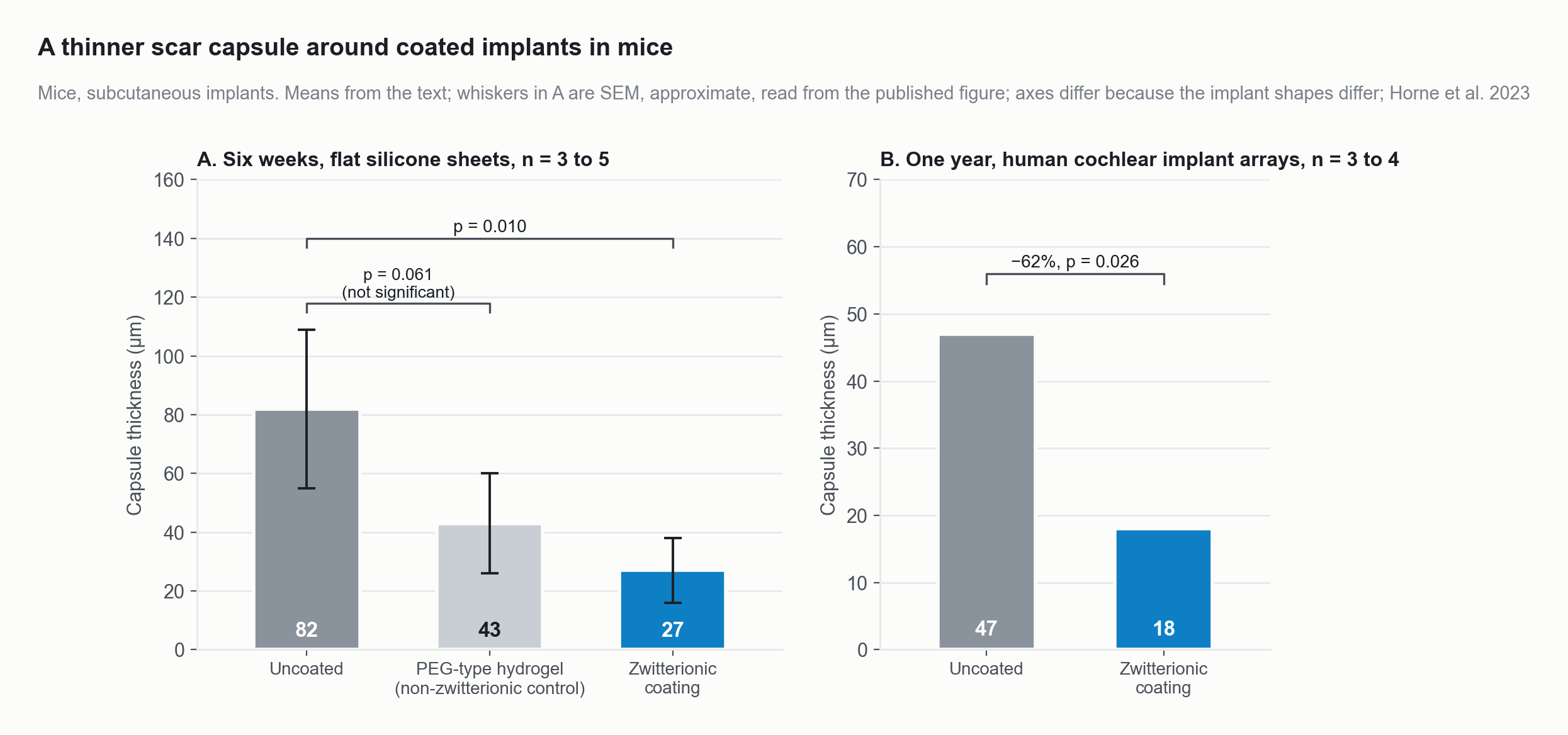
In mice, scar capsules were 67 percent thinner around zwitterionic-coated silicone at six weeks and 62 percent thinner around coated human cochlear implant arrays at one year. A non-zwitterionic hydrogel control did not differ significantly from uncoated.
Source: Horne R, Ben-Shlomo N, Jensen M, et al. Acta Biomaterialia 2023;166:212-223, Figs 5D and 7I (means and p values from the text; SEM whiskers approximate, read from the published figure). doi:10.1016/j.actbio.2023.05.011
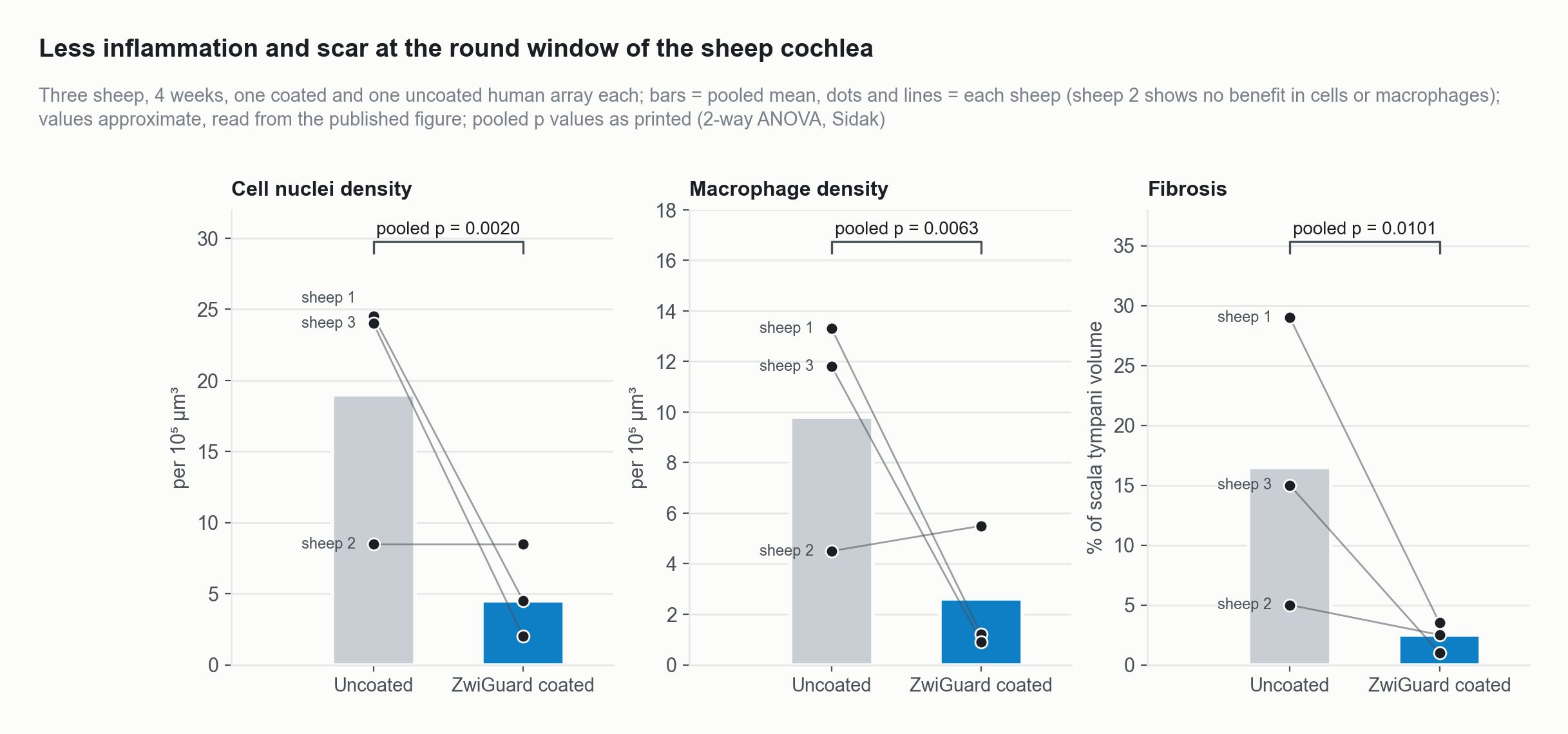
At the round window of the sheep cochlea, coated arrays had fewer cell nuclei, fewer macrophages and less fibrosis than uncoated arrays when the three sheep were pooled. One sheep showed no difference in cells or macrophages.
Source: Ben-Shlomo N, et al. Hearing Research 2026;474:109606, Fig 6E to 6G (bar and per-sheep values approximate, read from the published figure; pooled p values as printed). doi:10.1016/j.heares.2026.109606
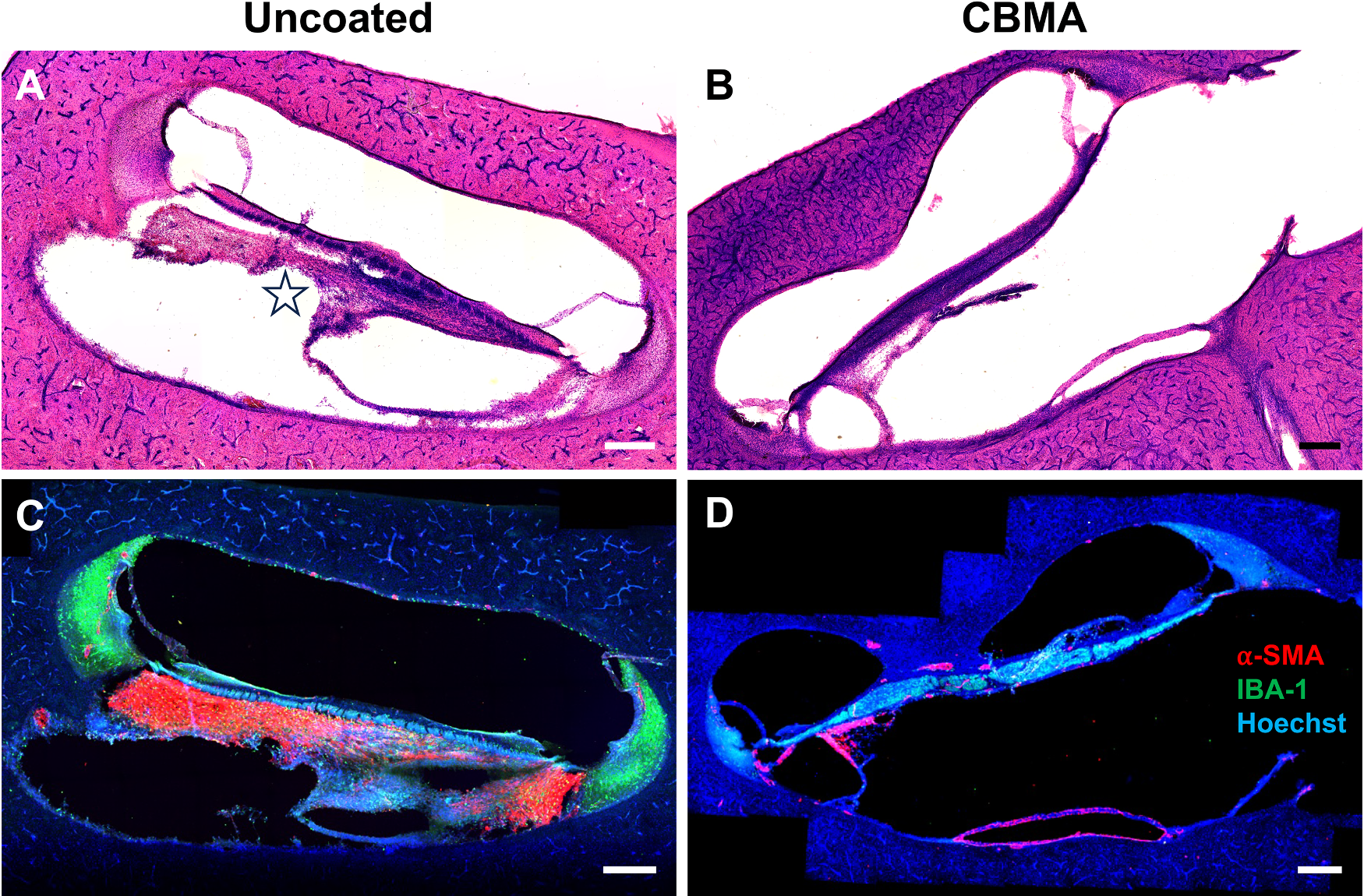
Sheep cochlea sections four weeks after implantation, uncoated array on the left (A, C) and coated array on the right (B, D). The top row is stained with H and E. The bottom row labels smooth muscle actin (red), macrophages (IBA-1, green) and cell nuclei (blue).
Ben-Shlomo et al. 2026, Hearing Research, CC BY 4.0
03
Electrode impedance
Working human cochlear implant arrays read lower impedance when coated, in sheep. Impedance was roughly two thirds lower at implantation and about half lower at four weeks (Ben-Shlomo 2026).
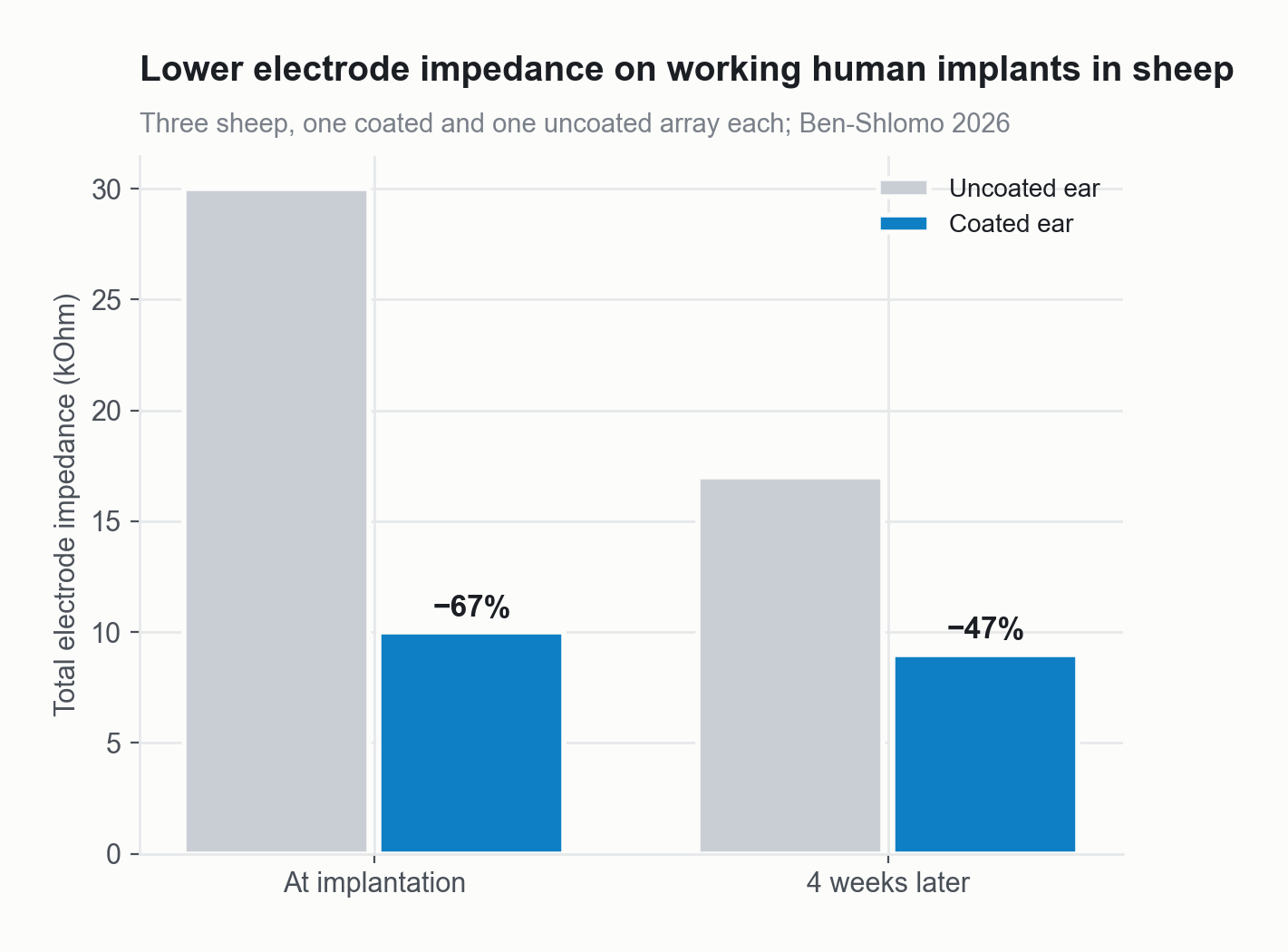
Electrode impedance of coated versus uncoated cochlear implant arrays in sheep.
Source: Ben-Shlomo et al. 2026, Hearing Research 474:109606, Fig 3B (values read from the figure).
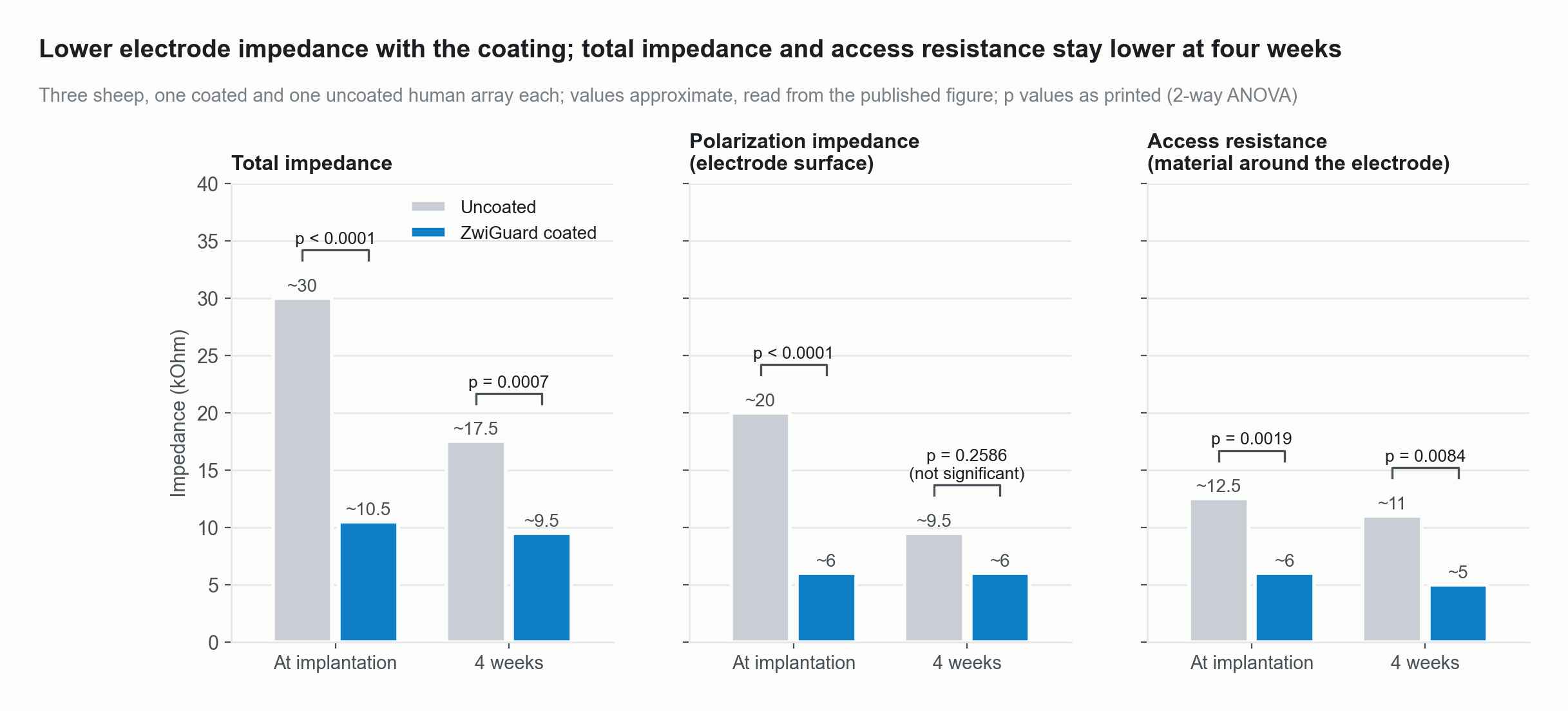
Total impedance, polarization impedance and access resistance of coated and uncoated human cochlear implant arrays in sheep, at implantation and at four weeks.
Source: Ben-Shlomo N, et al. Hearing Research 2026;474:109606, Fig 3B to 3D (bar heights approximate, read from the published figure; p values as printed). doi:10.1016/j.heares.2026.109606
04
Insertion force and friction
In human cadaveric cochleae, coated arrays needed about half the peak insertion force: about 42 percent less in one study (Bennion 2021) and about 50 percent less in another (Peel 2024). Friction on coated silicone was more than 90 percent lower, and stayed about 90 percent lower after three weeks in mice (Bennion 2021, Peel 2024).
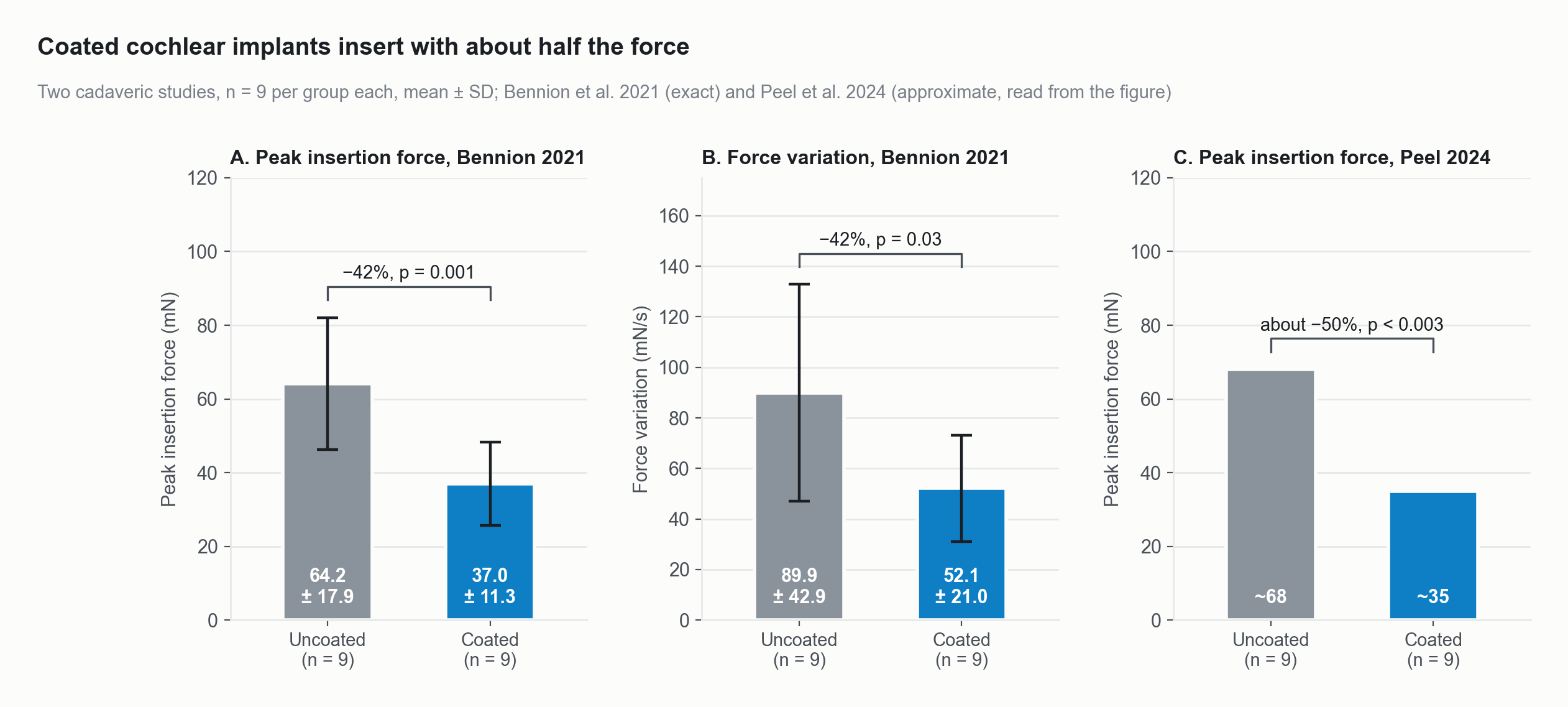
Coated cochlear implant arrays needed about half the peak insertion force of uncoated arrays in two human cadaveric studies: about 42 percent less (Bennion 2021) and about 50 percent less (Peel 2024).
Source: Bennion DM, Horne R, Peel A, Reineke P, Henslee A, Kaufmann C, Guymon CA, Hansen MR. Otology and Neurotology 2021;42(10):1476-1483, Fig 4A and 4B (means and SD from the text), doi:10.1097/MAO.0000000000003288; Peel A, Bennion D, Horne R, Hansen MR, Guymon CA. ACS Applied Bio Materials 2024;7:3124-3135, Fig 13A (values approximate, read from the published figure), doi:10.1021/acsabm.4c00156.
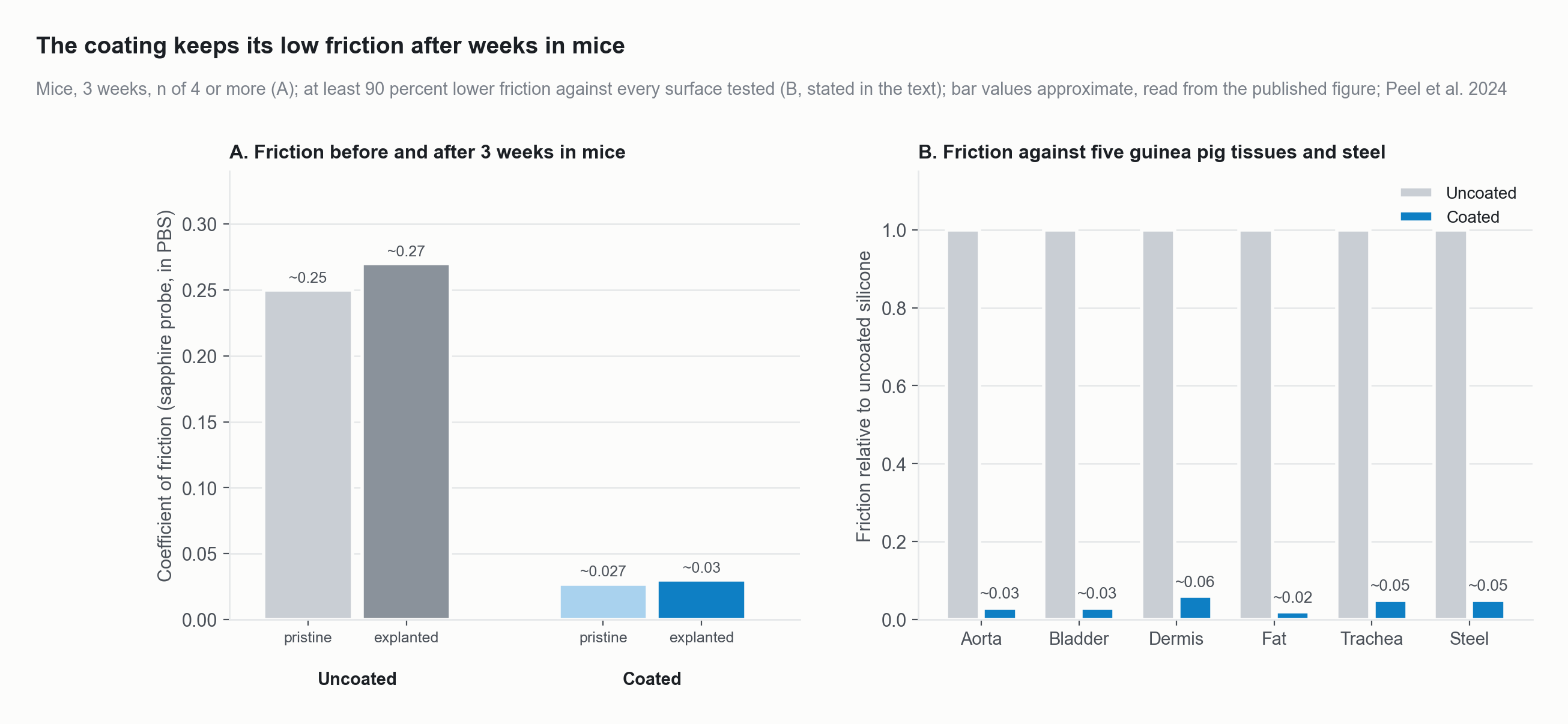
Friction of uncoated vs coated silicone, before and after three weeks in mice (panel A). Coated silicone kept about 90 percent lower friction, and had at least 90 percent lower friction against five guinea pig tissues and steel.
Source: Peel A, Bennion D, Horne R, Hansen MR, Guymon CA. ACS Applied Bio Materials 2024;7:3124-3135, Figs 4 and 5A (values approximate, read from the published figure; the at-least-90-percent statement is from the text). doi:10.1021/acsabm.4c00156
05
Protein, cells, bacteria and friction
Thirty-eight published bench comparisons from eight papers, 2017 to 2026, cover protein adsorption, cell attachment, bacterial adhesion and friction. Every one was lower on the coated surface. The median reduction was 94 percent, and the range was 53 to 99 percent. The browser below adds ten more variants, 48 in all. In rats challenged with S. aureus, coated implants carried far fewer bacteria at day 21 (Shen 2021).
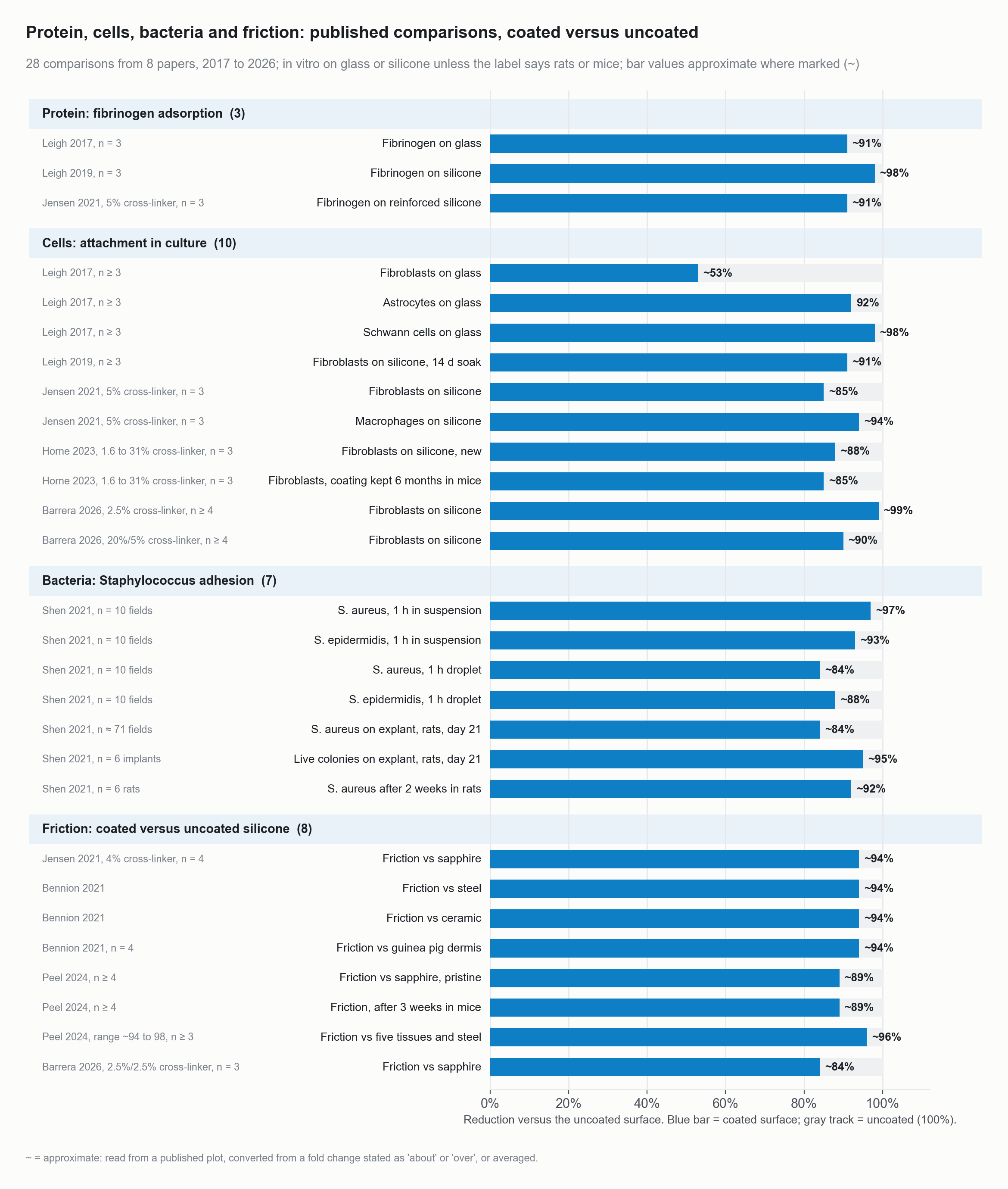
Protein, cells, bacteria and friction: every published comparison of a coated surface with an uncoated one, as percent reduction. Filter by category, chemistry, setting or paper, then hover or focus a bar for the values, n and p. The static chart shows 38 of the 48 comparisons, from 8 papers.
Source: Leigh BL, et al. Biomacromolecules 2017;18(8):2389-2401 (Fig 4 fibrinogen; Figs 6E, 7E, 8E cells on glass; fibrinogen and fibroblast values read from the published plots, astrocyte and Schwann cell values from the stated fold changes); Leigh BL, et al. Langmuir 2019;35(4):1100-1110 (Fig 7D fibrinogen; Fig 10D fibroblasts after 14 days in medium, plotted ratios used because the plotted absolute values conflict with the text); Jensen MJ, et al. ACS Biomaterials Science and Engineering 2021;7(9):4494-4502 (Figs 1G, 2G, 3G at 5 percent cross-linker; Fig 5A friction at 4 percent; values read from the published plots); Shen N, et al. ACS Applied Bio Materials 2021;4(2):1283-1293 (Fig 3 in vitro, Figs 7C, 7D rat explants at day 21, Fig 8 after 2 weeks in rats; values read from the published plots); Horne R, et al. Acta Biomaterialia 2023;166:212-223 (Fig 3F, mean of four cross-linker levels, new and after 6 months in mice; read from the published plot); Bennion DM, et al. Otology and Neurotology 2021;42(10):1476-1483 (Fig 1B, steel, ceramic and guinea pig dermis; text states more than 90 percent lower, p < 0.0001); Peel A, et al. ACS Applied Bio Materials 2024;7:3124-3135 (Fig 4 pristine and after 3 weeks in mice; Fig 5A six probes, bar shows the mean, range in the label; read from the published plots); Barrera G, et al. ACS Applied Polymer Materials 2026;8(18):16328-16338, doi:10.1021/acsapm.6c02510 (Fig 6 fibroblasts, text states more than 99 percent for low and about 90 percent for high cross-linker; Fig 4B friction, best group 2.5/2.5 percent).
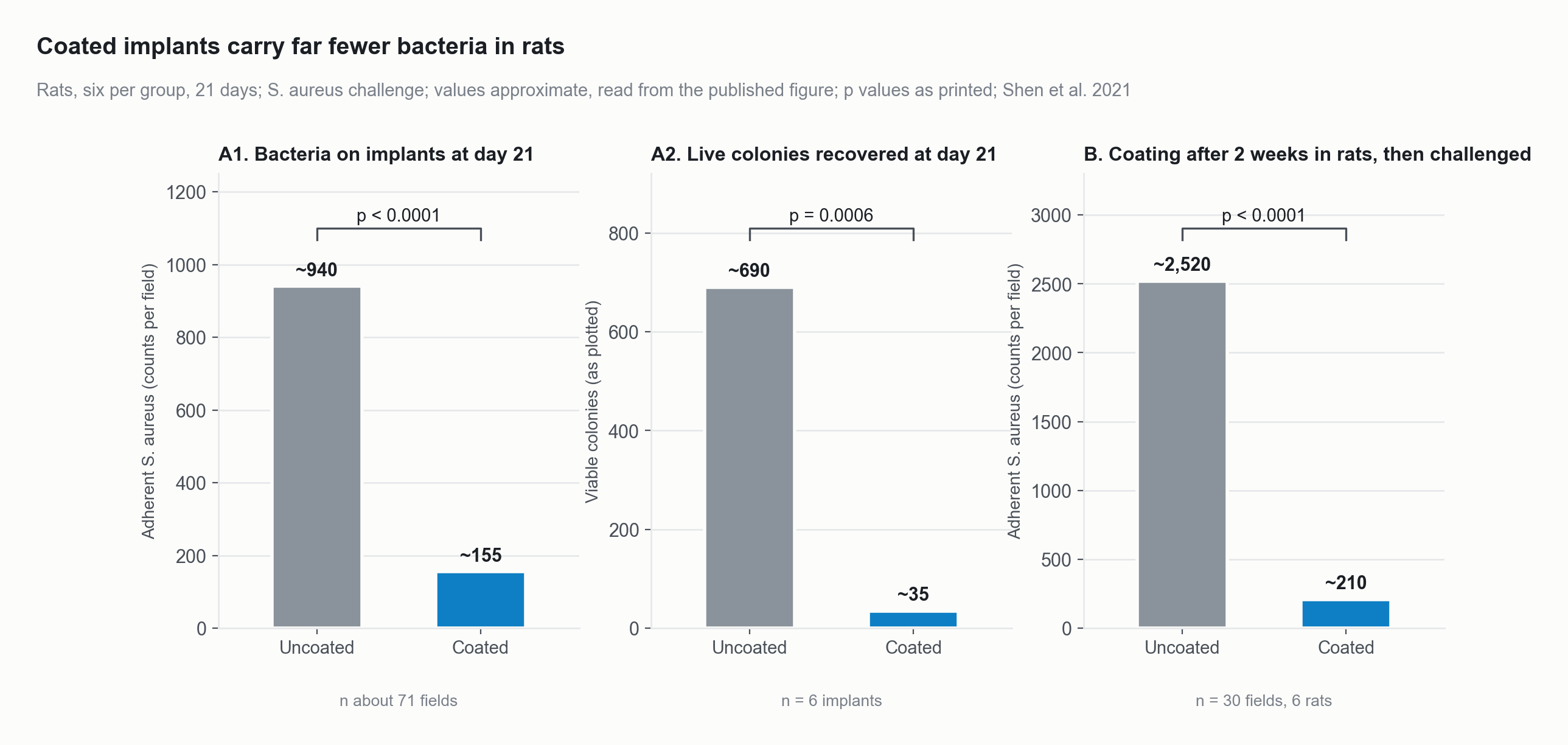
In rats challenged with S. aureus, coated silicone implants carried far fewer bacteria and live colonies at day 21, and a coating kept in a rat for two weeks still resisted a fresh S. aureus challenge.
Source: Shen N, Cheng E, Whitley JW, Horne RR, Leigh B, Xu L, Jones BD, Guymon CA, Hansen MR. ACS Applied Bio Materials 2021;4(2):1283-1293, Figs 7C, 7D and 8 (values approximate, read from the published figure; p values as printed). doi:10.1021/acsabm.0c01147
06
Durability
Checkpoints run from two weeks in rats to one year in mice. At each one the film was intact or still doing its job. The friction measurements after explant are in section 4.
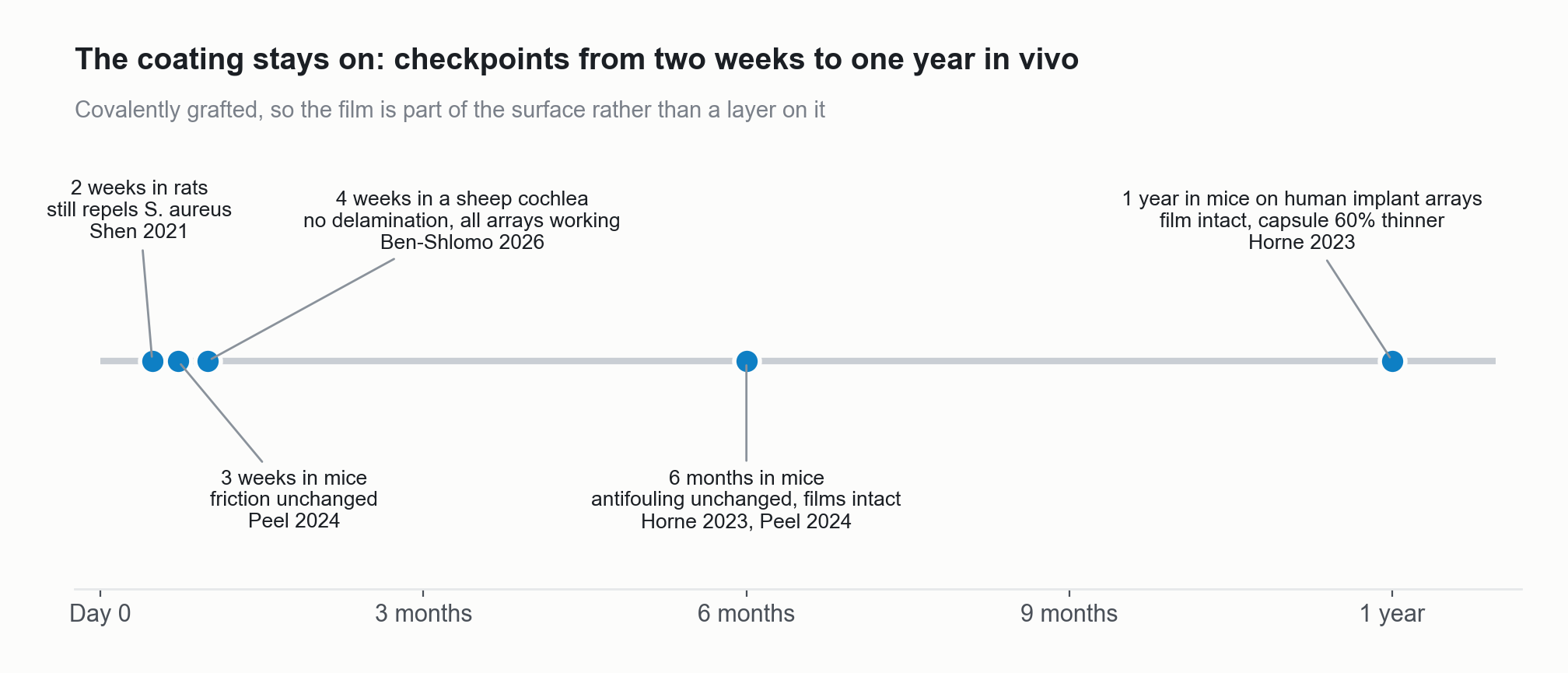
In-vivo durability checkpoints from two weeks to one year.
Source: Shen 2021; Peel 2024; Ben-Shlomo 2026; Horne 2023.
07
Adhesion and tuning
The explorer shows every lap-shear group in our database, by substrate. With enough grafting agent, the gel fails before its bond to silicone does (Leigh 2019). The cross-linker level trades stiffness against antifouling, and the best balance is at roughly 5 to 15 percent (Jensen 2021).
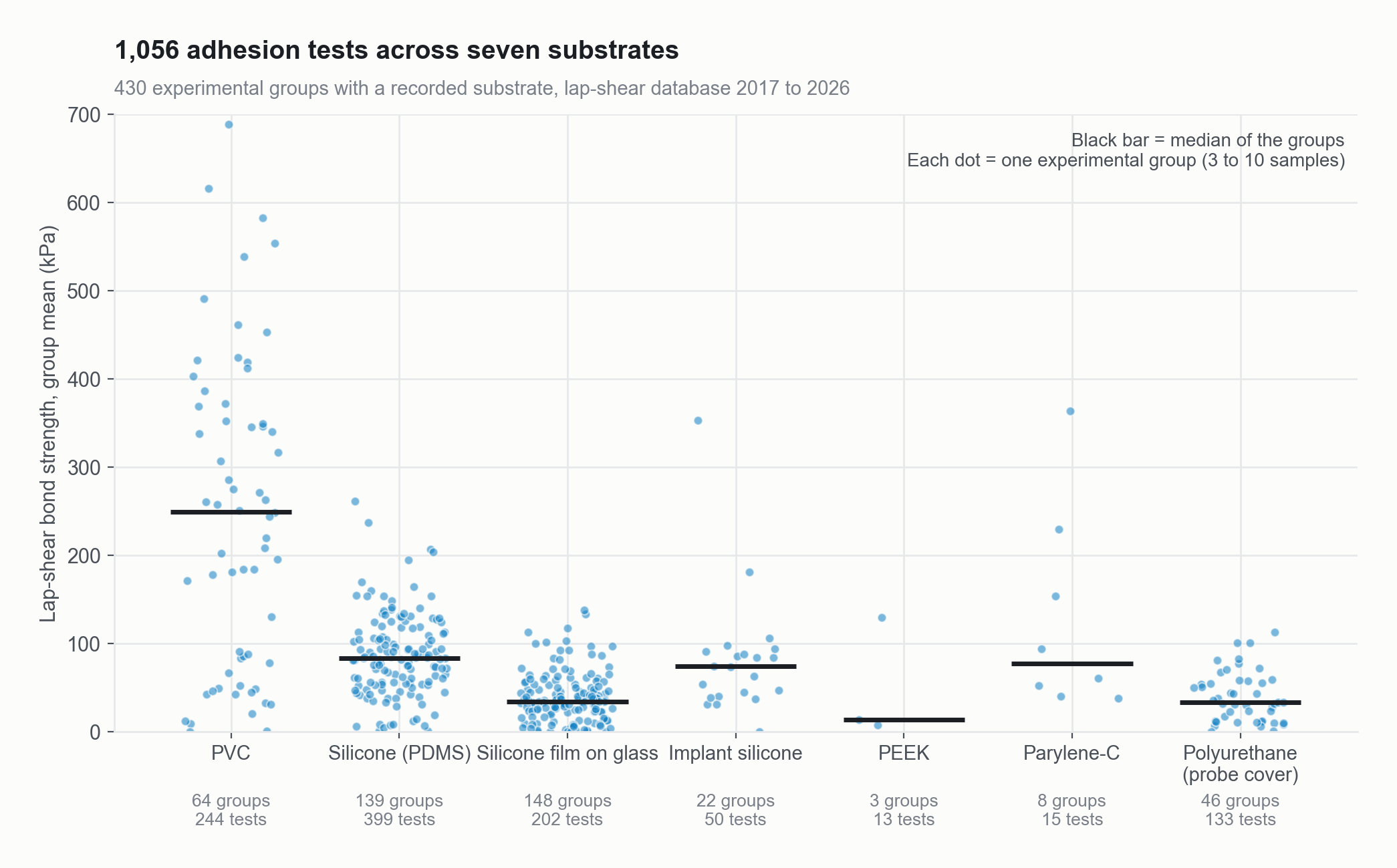
Each dot is one experimental group (3 to 10 samples); black bar = median. ZwiCoat lap-shear database, 2017 to 2026; formulation details withheld. Filter by substrate, year or failure mode, then hover or focus a dot for the values.
Source: ZwiCoat lap-shear database, 2017 to 2026 (internal data; formulation details withheld).
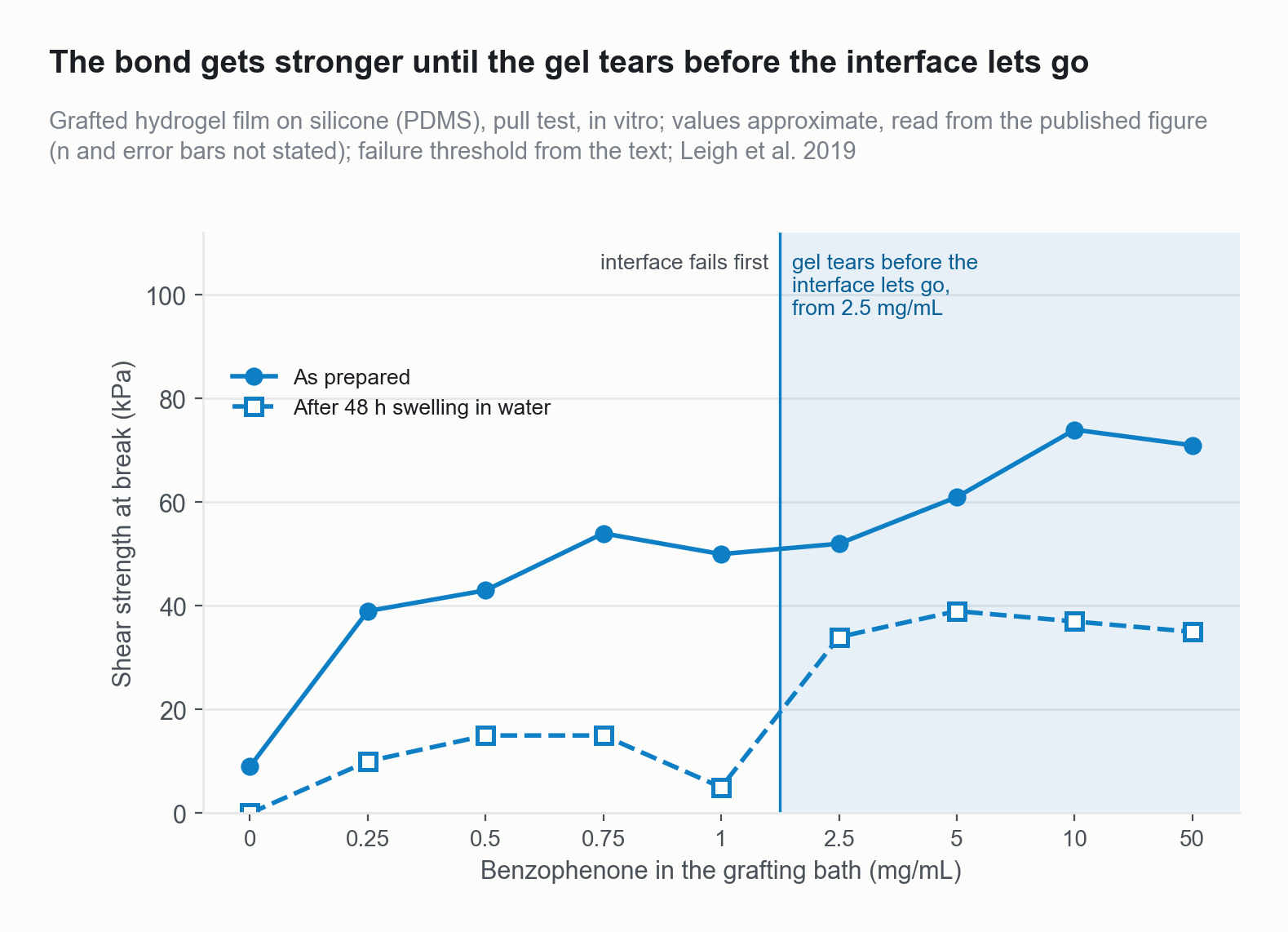
Shear bond strength of the zwitterionic film on silicone rises with benzophenone grafting agent until failure moves from the silicone interface into the gel itself, at 2.5 mg/mL.
Source: Leigh BL, Cheng E, Xu L, Derk A, Hansen MR, Guymon CA. Langmuir 2019;35(4):1100-1110, Fig 6 (values approximate, read from the published figure and converted from N/m2 x 10^4 to kPa; failure thresholds from the text, 2.5 mg/mL for SBMA and 5 mg/mL for CBMA). doi:10.1021/acs.langmuir.8b00838
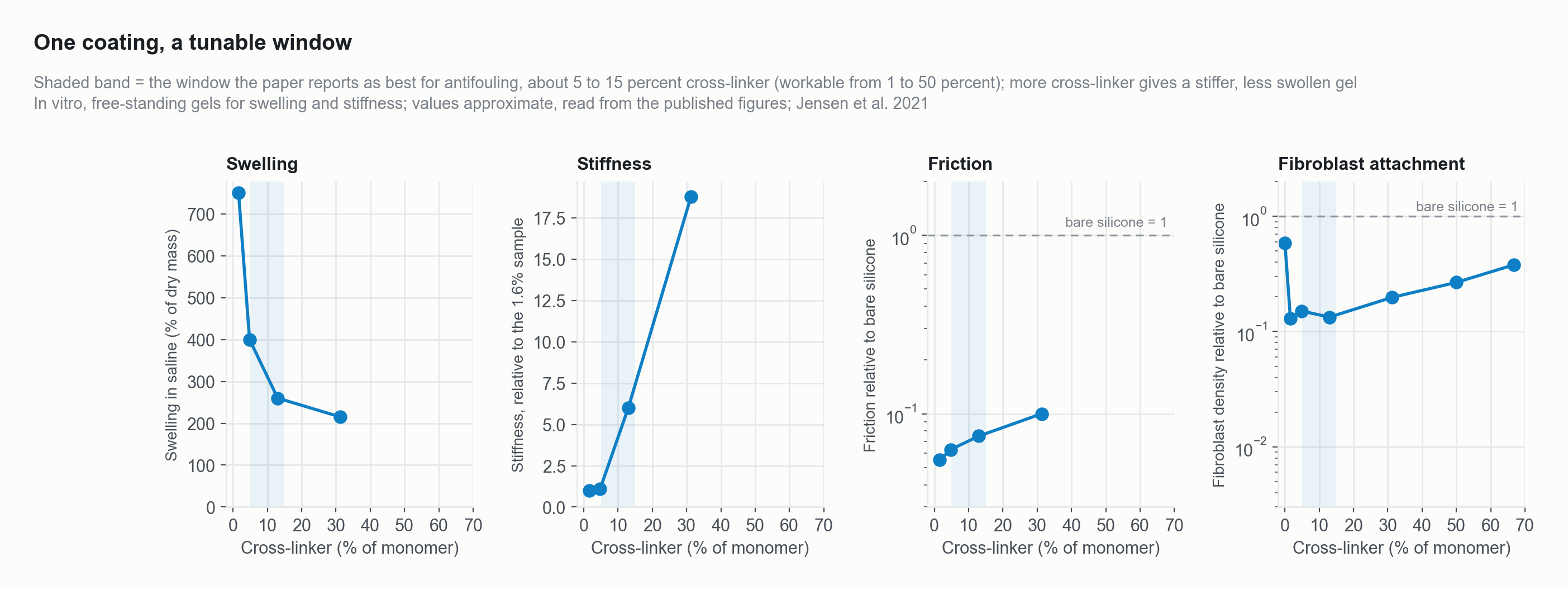
For the coating, more cross-linker makes the gel stiffer and less swollen, while protein, cell and friction benefits are strongest at about 5 to 15 percent cross-linker.
Source: Jensen MJ, Peel A, Horne R, Chamberlain J, Xu L, Hansen MR, Guymon CA. ACS Biomaterials Science and Engineering 2021;7(9):4494-4502, Figs 3G, 4A, 4B, 5B (SBMA series; values approximate, read from the published figures; stiffness shown relative to the lowest cross-linker, baseline implied by the text, 50-fold rise; the 5 to 15 percent window is stated in the text). doi:10.1021/acsbiomaterials.1c00852
08
Every in-vivo result
Forty-six comparisons from the published animal and cadaver studies, one marker each. Filter by species and metric, then hover or focus a marker for the paper, n and p value.
Each published comparison of a coated surface with an uncoated one. Time is on a log axis, and negative values mean less with the coating. The static chart is the fibrosis summary: 10 measurements in mice, rats and sheep.
Source: Horne 2023 Acta Biomaterialia; Peel 2024 ACS Applied Bio Materials; Shen 2021 ACS Applied Bio Materials; Bennion 2021 Otology and Neurotology; Barrera 2026 ACS Applied Polymer Materials; Ben-Shlomo 2026 Hearing Research (values read from the published figures are marked approximate).
Publications
Where to read the work
Each paper links to the journal page through its DOI. The publications page has the full citations.
Papers
- Photografted dual-network zwitterionic hydrogel coatings for biomaterials
- Development of zwitterionic hydrogel thin film coatings of cochlear implant electrode arrays that reduce intracochlear inflammation and electrode impedance
- Enhancing Mucus Flow and Clearance by Grafting Zwitterionic Hydrogel Films to Luminal Surfaces
- Photografted Zwitterionic Hydrogel Coating Durability for Reduced Foreign Body Response to Cochlear Implants
- Reducing the foreign body response on human cochlear implants and their materials in vivo with photografted zwitterionic hydrogel coatings
- Zwitterionic Photografted Coatings of Cochlear Implant Biomaterials Reduce Friction and Insertion Forces
- Antifouling and Mechanical Properties of Photografted Zwitterionic Hydrogel Thin-Film Coatings Depend on the Cross-Link Density
- Photograftable Zwitterionic Coatings Prevent Staphylococcus aureus and Staphylococcus epidermidis Adhesion to PDMS Surfaces
- Antifouling Photograftable Zwitterionic Coatings on PDMS Substrates
- Photopolymerizable Zwitterionic Polymer Patterns Control Cell Adhesion and Guide Neural Growth
Dissertations
- Engineering surfaces using photopolymerization to improve cochlear implant materials
- Durable photografted zwitterionic hydrogel coatings to decrease biofouling and increase lubricity for biomaterials
- Improving cochlear implant and tympanostomy tube surfaces via photografted zwitterionic thin films
Patents
Values quoted from published papers were read from the printed figures unless the paper states them in text; treat them as approximate. No coated device has been implanted in a human; human cochlear implant arrays were tested in mice, sheep and cadaveric cochleae.
Bring us a device with a fouling, scar or friction problem.
We coat it free, with no cap on quantity, and return it with matched uncoated controls and data.