
Technology
A hydration barrier, not a drug.
Every device that touches the body starts the same way. Within seconds, proteins coat it. Bacteria, cells and clot build on that film. Depending on the device, the result is a scar capsule, an infection, a blockage or a lost signal. ZwiGuard™ resists that first step.
How it works
A shell of water that nothing can displace.
ZwiGuard is a zwitterionic hydrogel made from sulfobetaine and carboxybetaine methacrylate.
Each repeat unit carries balanced positive and negative charges and a strong dipole. The dipole binds a tightly ordered shell of water.
Proteins, cells and bacteria cannot displace that shell, so they do not stick. The hold is stronger than the hydrogen-bonded hydration of PEG.
Zwitterionic hydrogels implanted in mice resisted the foreign body reaction in a 2013 study (Zhang et al., Nature Biotechnology).
One UV step does two jobs. Benzophenone grafts the hydrogel to the device surface. The same light crosslinks the network.
The result is a crosslinked hydrogel anchored to the device. It is not a thin tethered brush, an adsorbed layer that can wash off, or an additive blended into the polymer.
A protein, a cell and a bacterium approach the water shell and turn away. Schematic, not to scale.
Source: ZwiCoat schematic. Mechanism after Zhang et al. 2013, Nature Biotechnology 31:553, and the photografting method in US 11,525,069.
Antifouling
Protein, cells and bacteria stay off.
Across 38 published comparisons of coated and uncoated surfaces, from eight papers, the median reduction was 94 percent. The range was 53 to 99 percent.
Fibrinogen adsorption fell by 91 to 98 percent (Leigh 2017, Leigh 2019, Jensen 2021). S. aureus adhesion fell by 97 percent in suspension and 84 percent on explants from rats (Shen 2021).
Friction against dermis was 94 percent lower (Bennion 2021). These are bench and explant measurements, not clinical results.
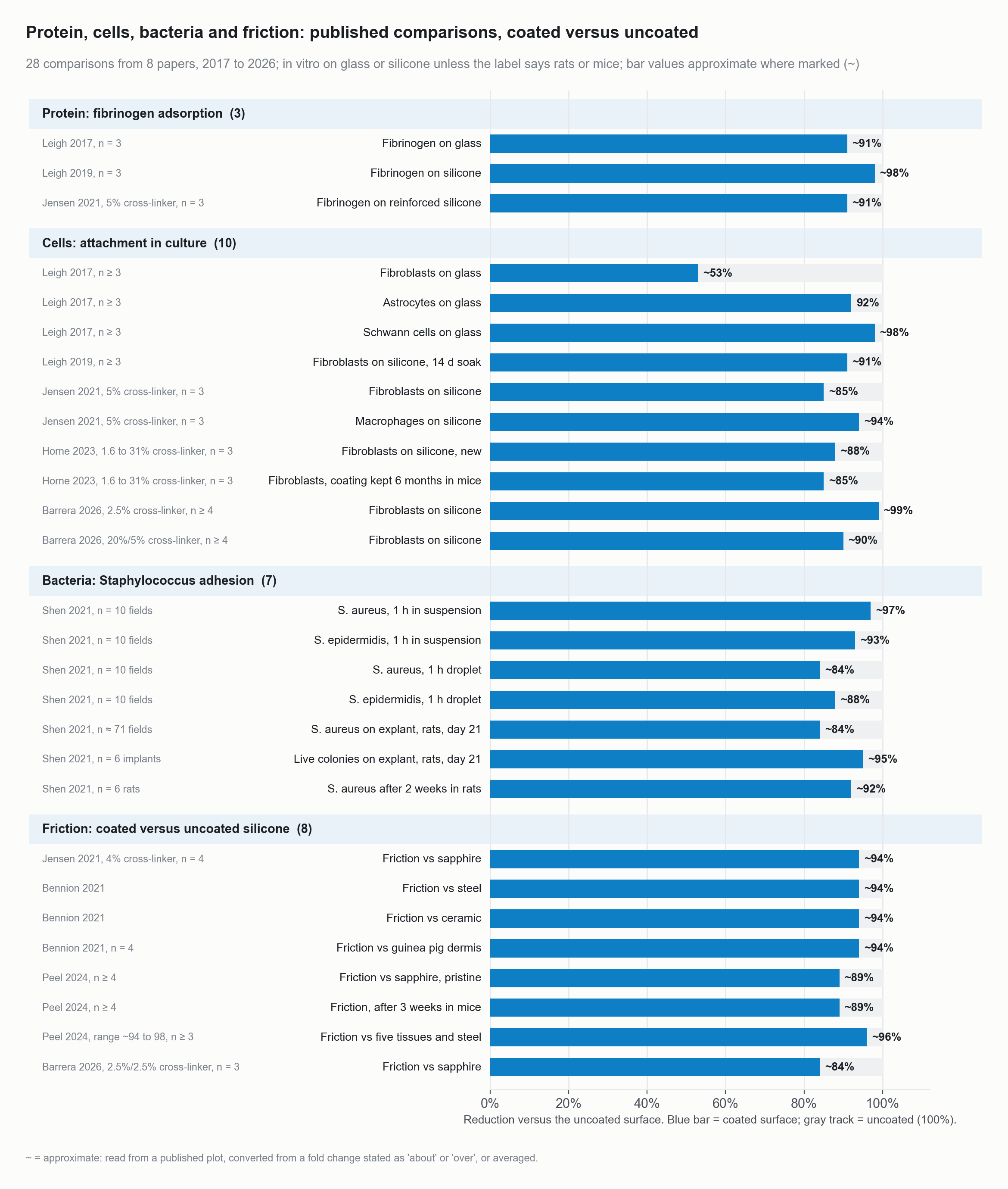
Protein, cells, bacteria and friction: every published bench comparison of coated versus uncoated surfaces (38 bars from 8 papers), as percent reduction.
Source: 38 comparisons from 8 papers, 2017 to 2026: Leigh 2017 Biomacromolecules; Leigh 2019 Langmuir; Jensen 2021 ACS Biomaterials Science and Engineering; Shen 2021 ACS Applied Bio Materials; Bennion 2021 Otology and Neurotology; Horne 2023 Acta Biomaterialia; Peel 2024 ACS Applied Bio Materials; Barrera 2026 ACS Applied Polymer Materials. Bar values approximate where marked, read from the published plots.
Less scar
Scar tissue was about 45 to 85 percent lower around coated surfaces.
In mice, rats and sheep, from four weeks to one year, the scar around coated silicone and coated cochlear implant arrays was smaller than around uncoated ones.
The largest reduction, about 85 percent less fibrosis, was in sheep cochleae at four weeks (Ben-Shlomo 2026, Hearing Research). The basal-turn measurement in the same study was not statistically significant.
In rats, four coated groups had capsules about 72 to 83 percent thinner at six weeks (Barrera 2026, ACS Applied Polymer Materials).
At one year in mice, the film was still intact and the capsule was about 60 percent thinner (Horne 2023).
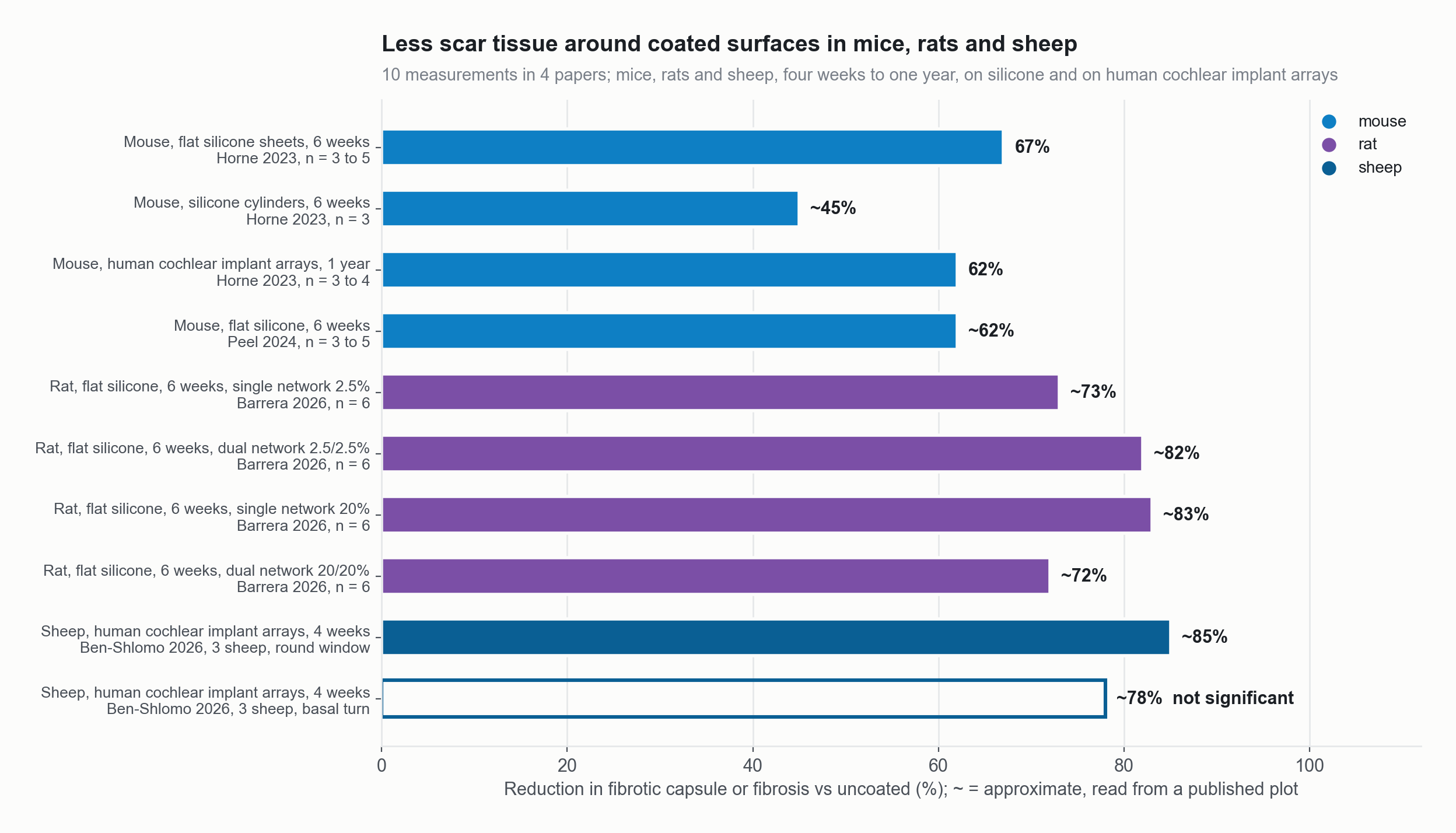
Less scar tissue around coated surfaces in mice, rats and sheep: percent reduction in fibrotic capsule or fibrosis, measurement by measurement. The hollow bar is not statistically significant.
Source: 10 measurements in mice, rats and sheep. Horne 2023, Acta Biomaterialia; Peel 2024, ACS Applied Bio Materials; Barrera 2026, ACS Applied Polymer Materials; Ben-Shlomo 2026, Hearing Research. Values read from the published figures; the basal-turn bar is not significant.
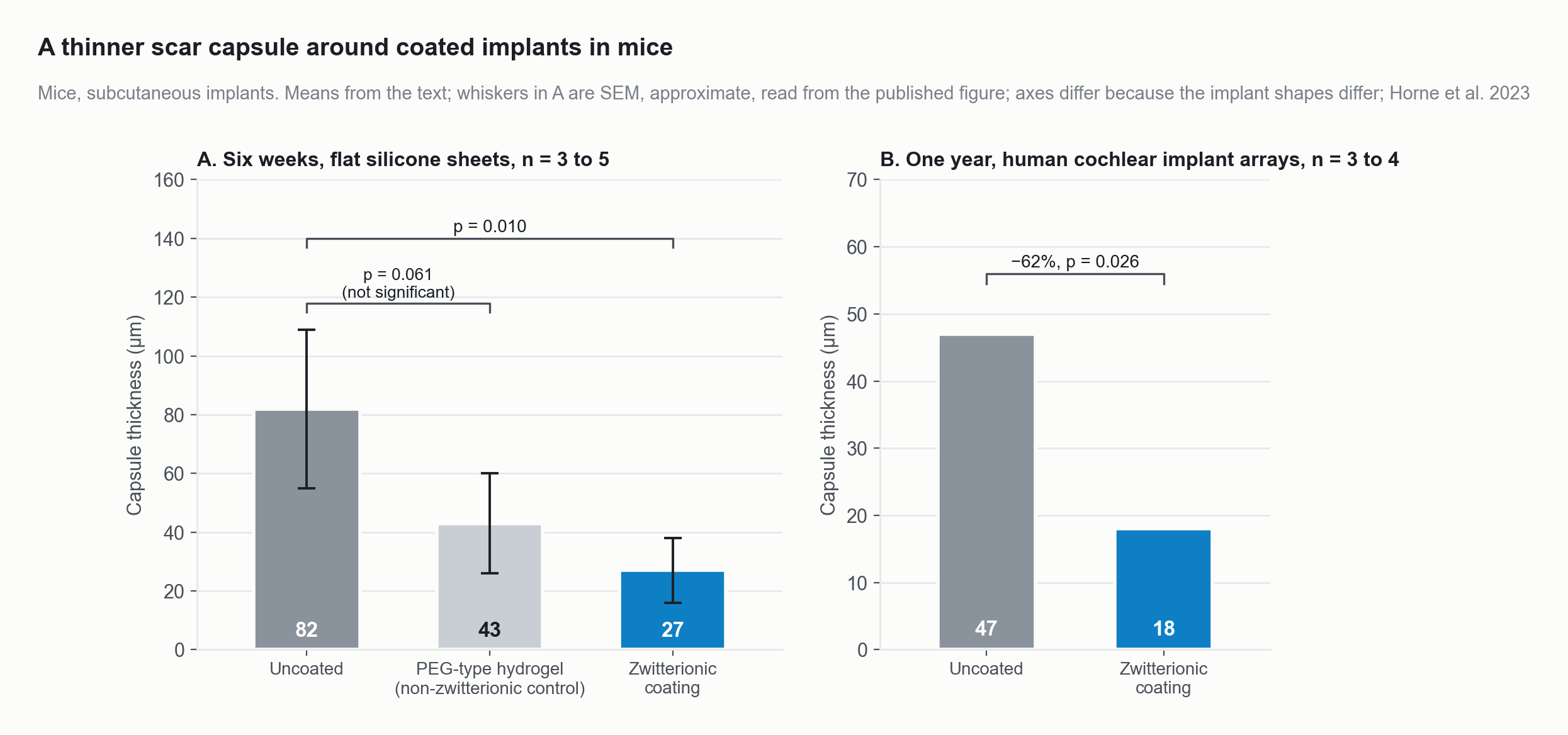
In mice, scar capsules were 67 percent thinner around zwitterionic-coated silicone at six weeks and 62 percent thinner around coated human cochlear implant arrays at one year. A non-zwitterionic hydrogel control did not differ significantly from uncoated.
Source: Horne R, Ben-Shlomo N, Jensen M, et al. Acta Biomaterialia 2023;166:212-223, Figs 5D and 7I (means and p values from the text; SEM whiskers approximate, read from the published figure). doi:10.1016/j.actbio.2023.05.011
Less friction, easier insertion
Friction fell by more than 90 percent. Insertion force fell by about half.
On silicone, friction fell by more than 90 percent against steel, ceramic and dermis (Bennion 2021).
Coated cochlear implant arrays needed about half the peak force to enter human cadaveric cochleae.
Peak insertion force fell about 42 percent in one study (Bennion 2021, 64.2 to 37.0 mN, n = 9, p = 0.001) and about 50 percent in another (Peel 2024, about 68 to 35 mN, read from the figure).
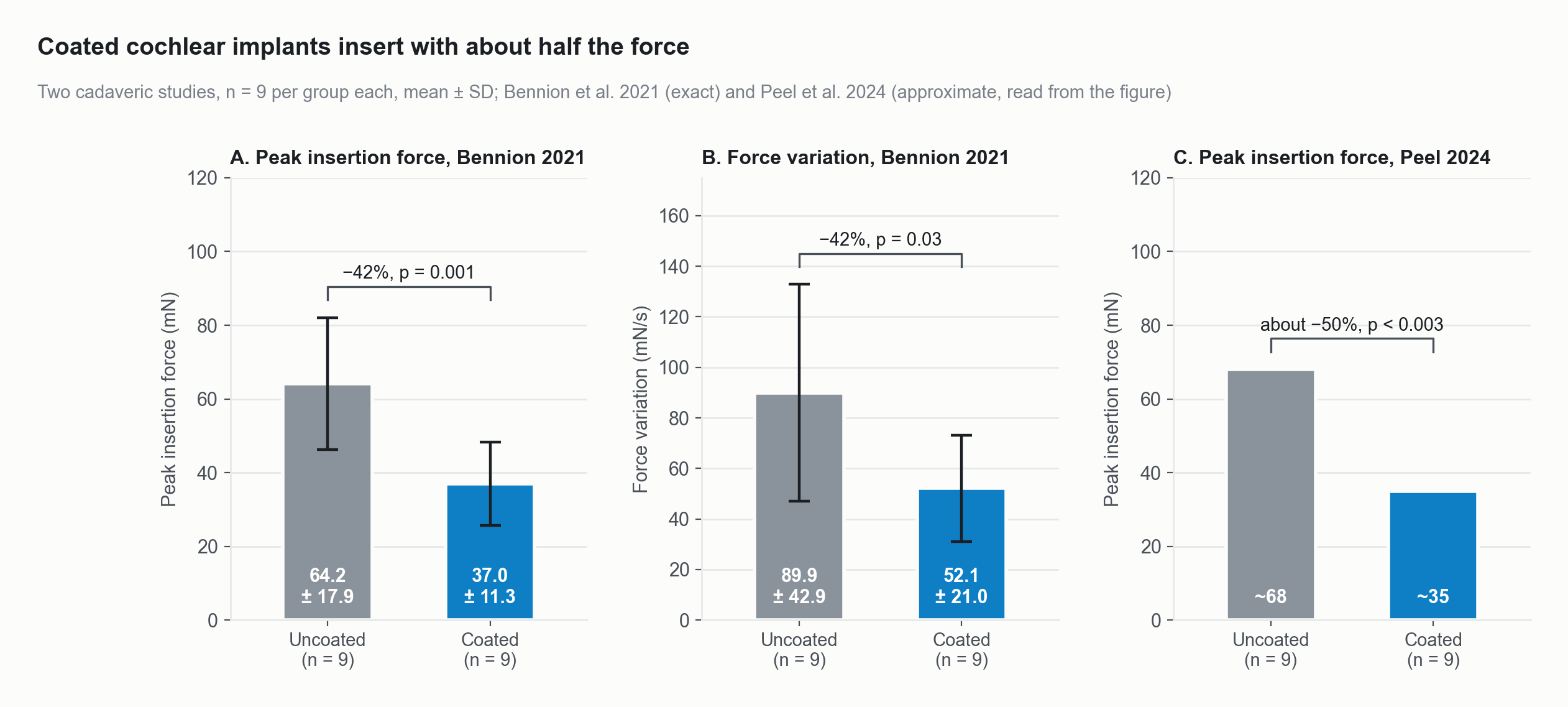
Coated cochlear implant arrays needed about half the peak insertion force of uncoated arrays in two human cadaveric studies: about 42 percent less (Bennion 2021) and about 50 percent less (Peel 2024).
Source: Bennion DM, Horne R, Peel A, Reineke P, Henslee A, Kaufmann C, Guymon CA, Hansen MR. Otology and Neurotology 2021;42(10):1476-1483, Fig 4A and 4B (means and SD from the text), doi:10.1097/MAO.0000000000003288; Peel A, Bennion D, Horne R, Hansen MR, Guymon CA. ACS Applied Bio Materials 2024;7:3124-3135, Fig 13A (values approximate, read from the published figure), doi:10.1021/acsabm.4c00156.
Lower impedance
Coated implant arrays read about half the impedance of uncoated ones.
Working human cochlear implant arrays in sheep read 67 percent lower impedance at implantation and 47 percent lower four weeks later.
The study used three sheep, with one coated and one uncoated array each (Ben-Shlomo 2026). The sheep cochleae also showed less inflammation.
No coated device has been implanted in a person.
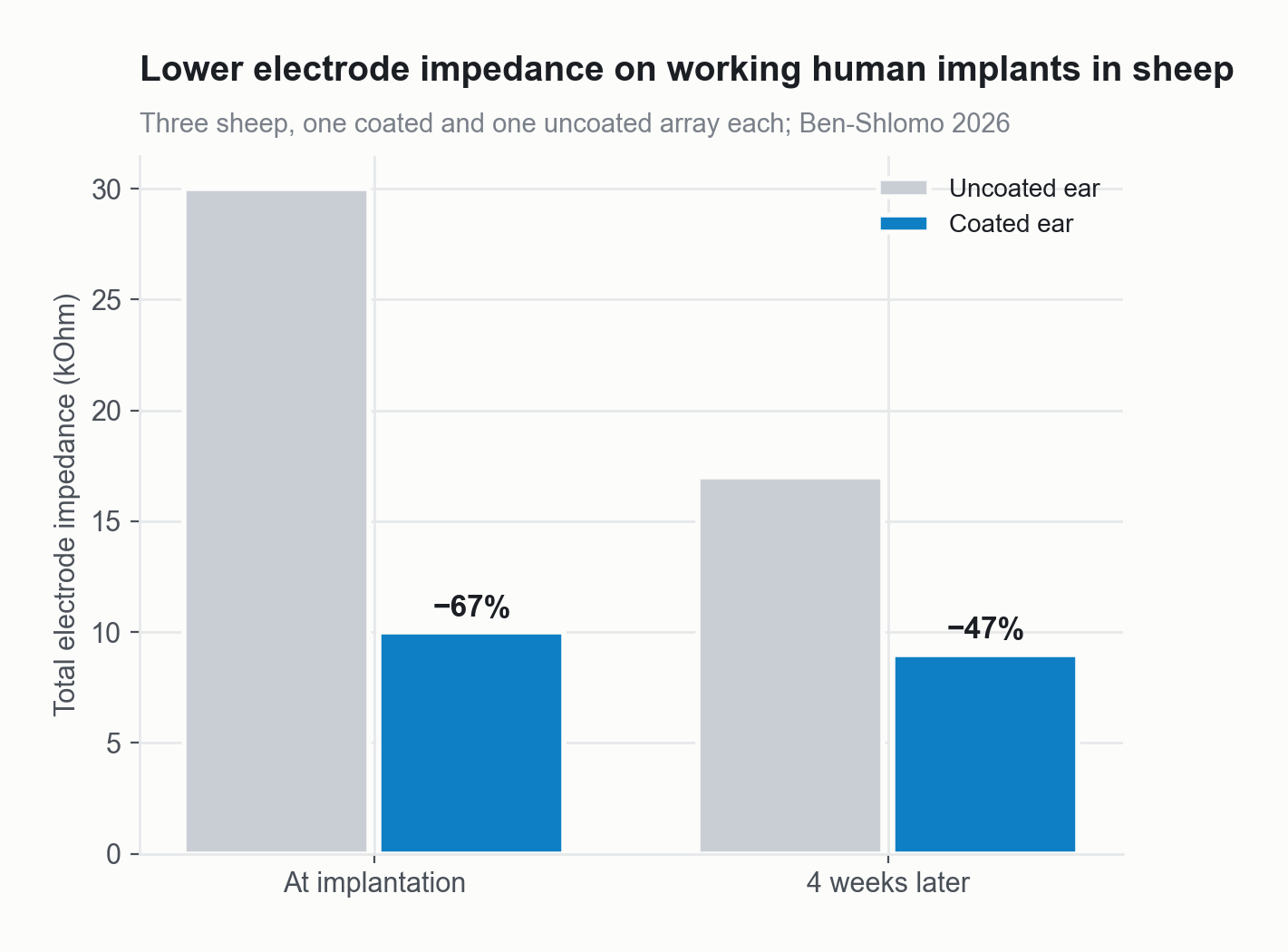
Electrode impedance of coated versus uncoated cochlear implant arrays in sheep.
Source: Ben-Shlomo et al. 2026, Hearing Research 474:109606, Fig 3B (values read from the figure).
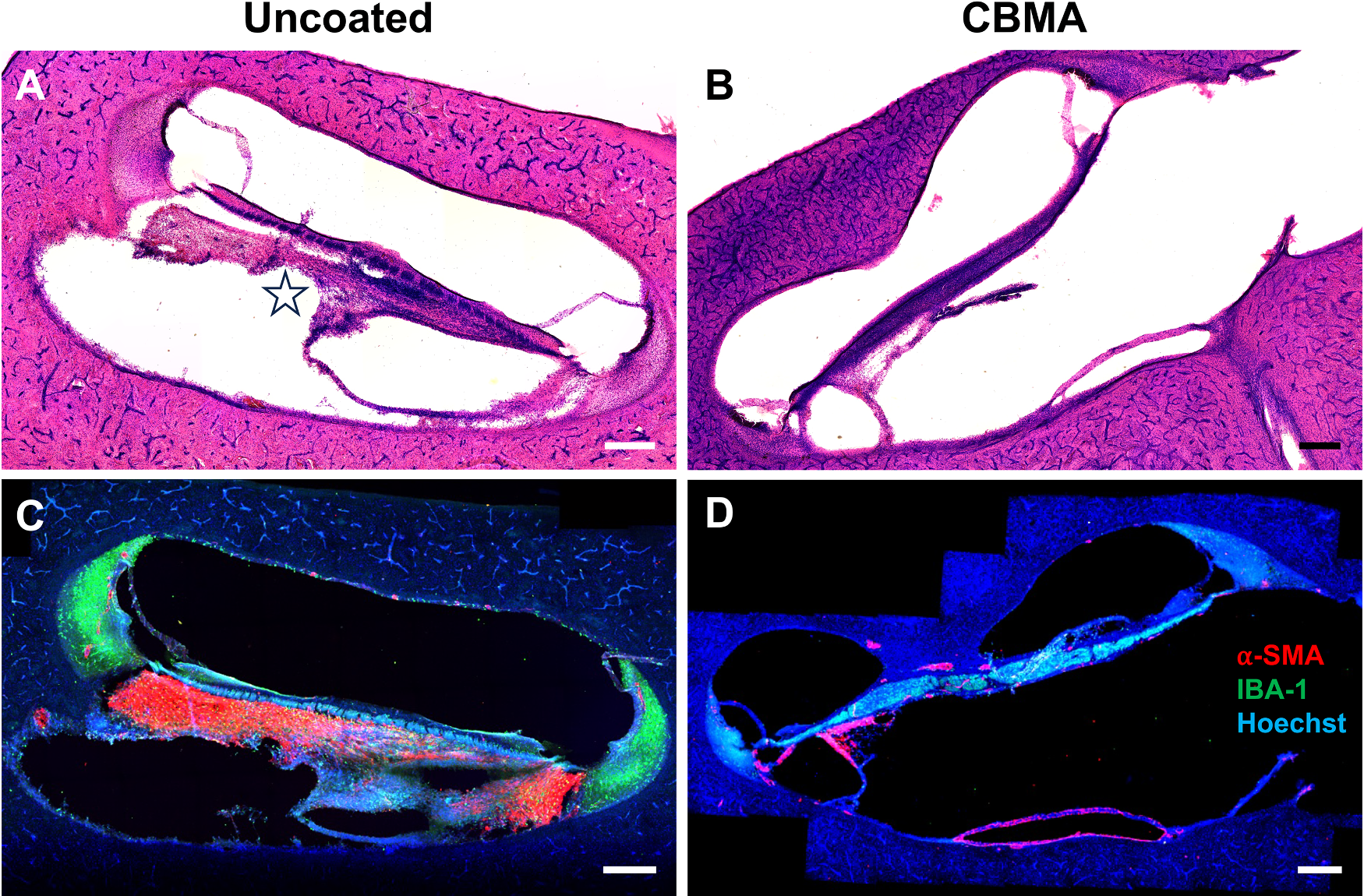
Sheep cochlea sections four weeks after implantation, uncoated on the left and coated on the right.
Ben-Shlomo et al. 2026, Hearing Research, CC BY.
It stays on
The film was still intact at one year in mice.
Checkpoints run from two weeks in rats to one year in mice.
Friction was unchanged after three weeks implanted in mice (Peel 2024). Antifouling was unchanged at six months (Horne 2023, Peel 2024).
A PEG-based control film partly detached at six weeks in mice, and the zwitterionic film did not (Horne 2023, Fig 5).
The coating has been tested through common sterilization cycles (steam, EtO, UV and gamma, wet or dry, and dry e-beam); wet e-beam did not pass. Bond strength held after gamma or e-beam plus shipping. We validate on your cycle during joint development.
Accelerated aging and shelf life are part of joint development too.
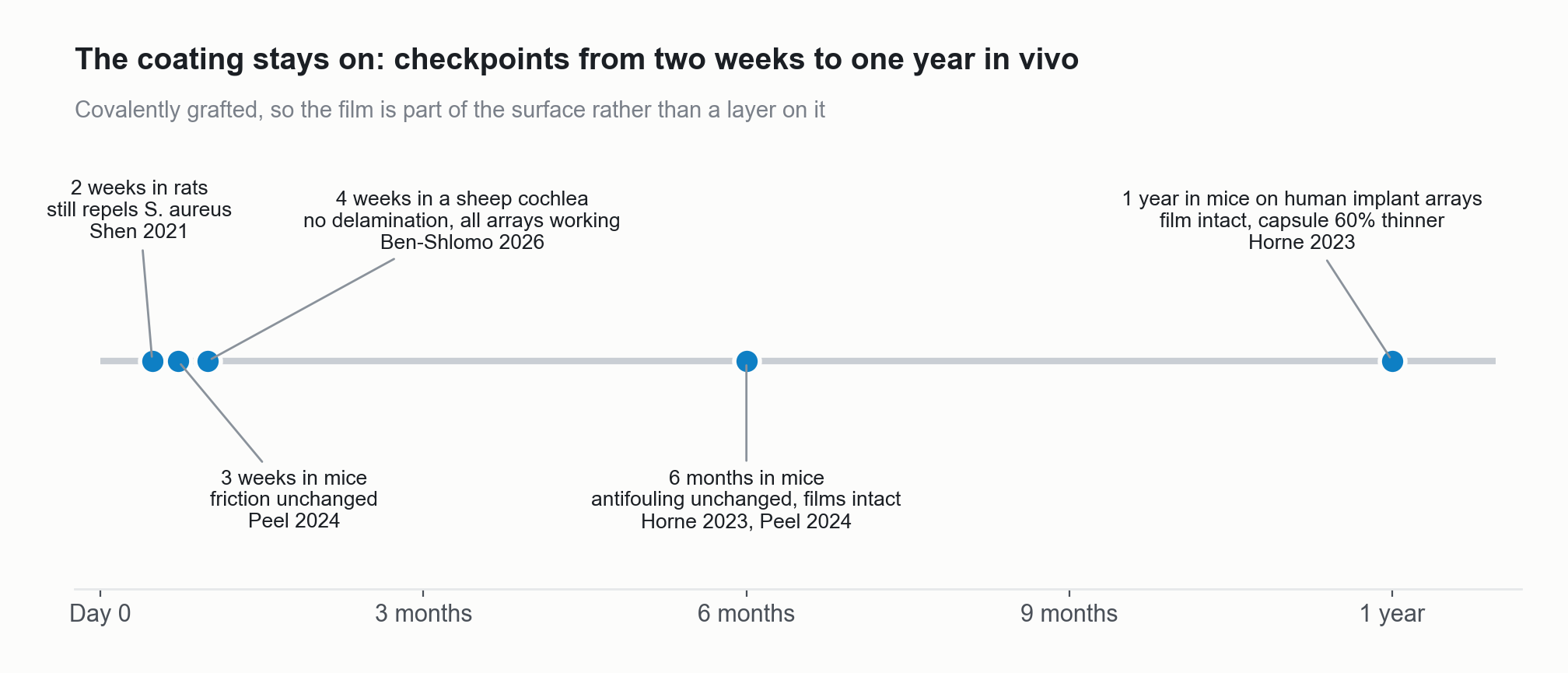
In-vivo durability checkpoints from two weeks to one year.
Source: Shen 2021; Peel 2024; Ben-Shlomo 2026; Horne 2023.
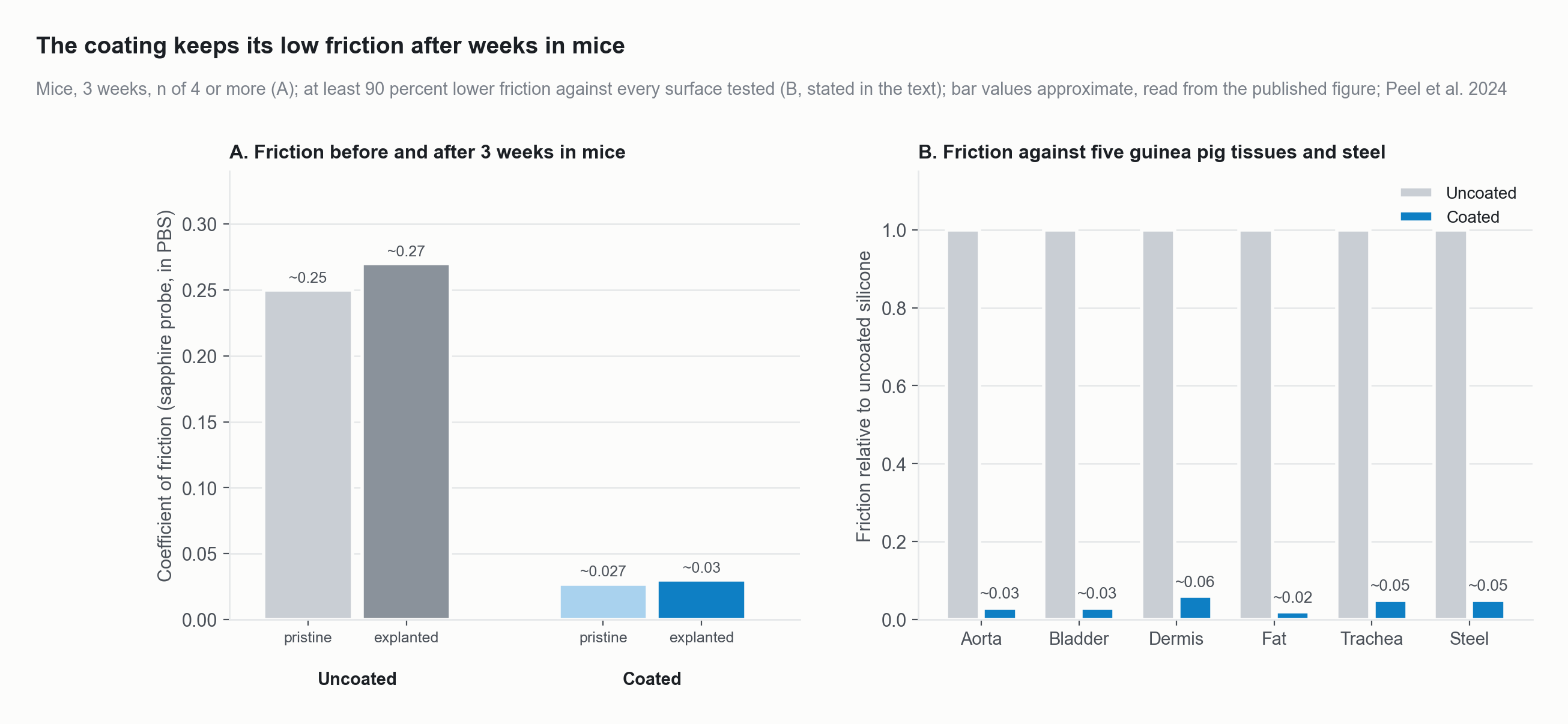
Friction of uncoated vs coated silicone, before and after three weeks in mice (panel A). Coated silicone kept about 90 percent lower friction, and had at least 90 percent lower friction against five guinea pig tissues and steel.
Source: Peel A, Bennion D, Horne R, Hansen MR, Guymon CA. ACS Applied Bio Materials 2024;7:3124-3135, Figs 4 and 5A (values approximate, read from the published figure; the at-least-90-percent statement is from the text). doi:10.1021/acsabm.4c00156
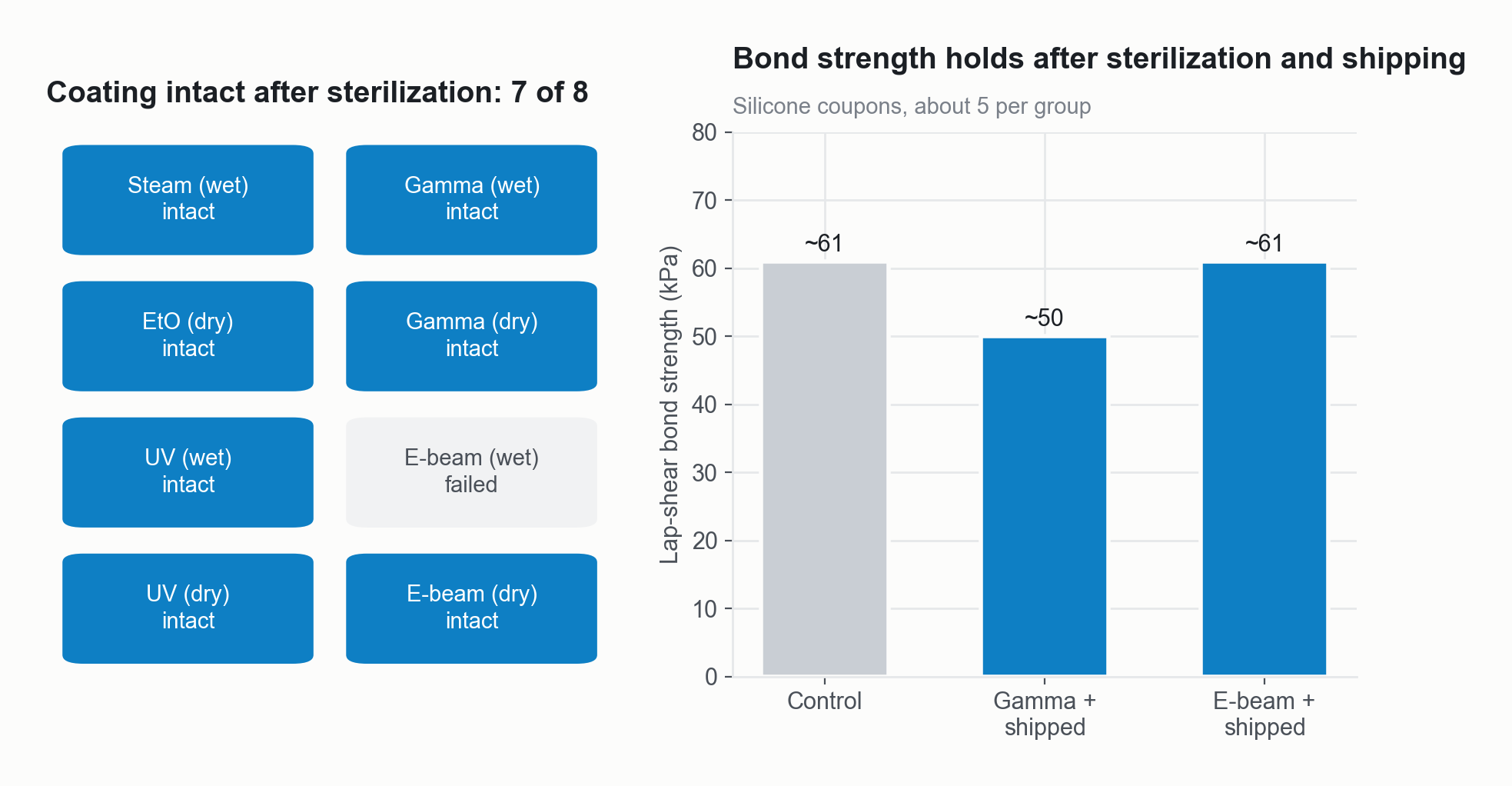
Sterilization compatibility and bond strength after sterilization plus shipping. The coating was intact after seven of eight sterilization cycles; wet e-beam failed.
Source: ZwiCoat CIVCO sterilization study, 2025 (Kyle Ruby). Internal data; silicone coupons, about 5 per group.
Substrates
Silicone is published. Your material is the feasibility round.
Bonds to silicone and polyurethane in our own tests; PVC, PEEK and parylene-C have archived adhesion tests; published adhesion data are on silicone (Leigh 2019).
The published tests are on silicone (PDMS), including real cochlear implant arrays, and on glass.
On silicone, adhesion tests fail inside the gel rather than at the silicone surface (Leigh 2019, Langmuir).
The issued patents name other polymers, including PVC, polyurethane and PEEK, as well as metals, glass and ceramics (US 11,814,526).
Whether the coating bonds to your material is what the feasibility round measures, on your parts.
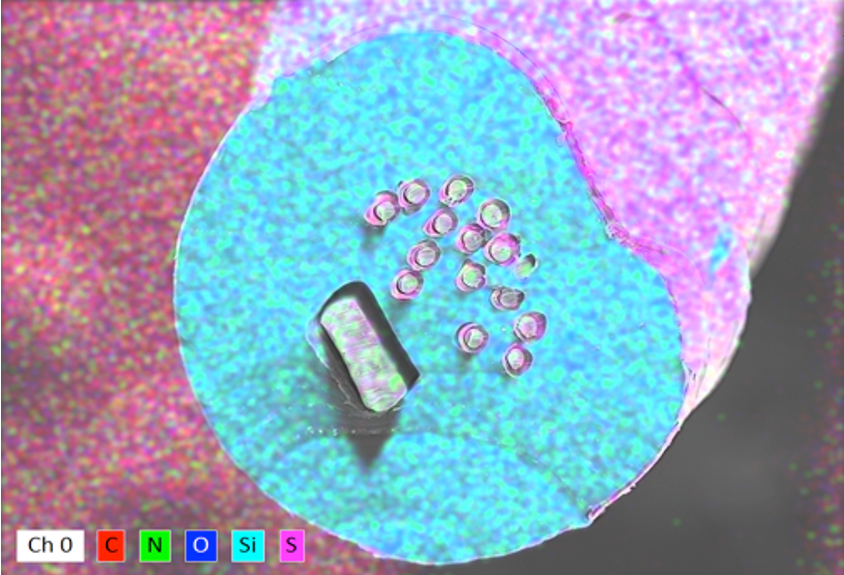
Cross-section of a coated cochlear implant array: elemental map showing the hydrogel film on the silicone carrier. ZwiCoat.
ZwiCoat
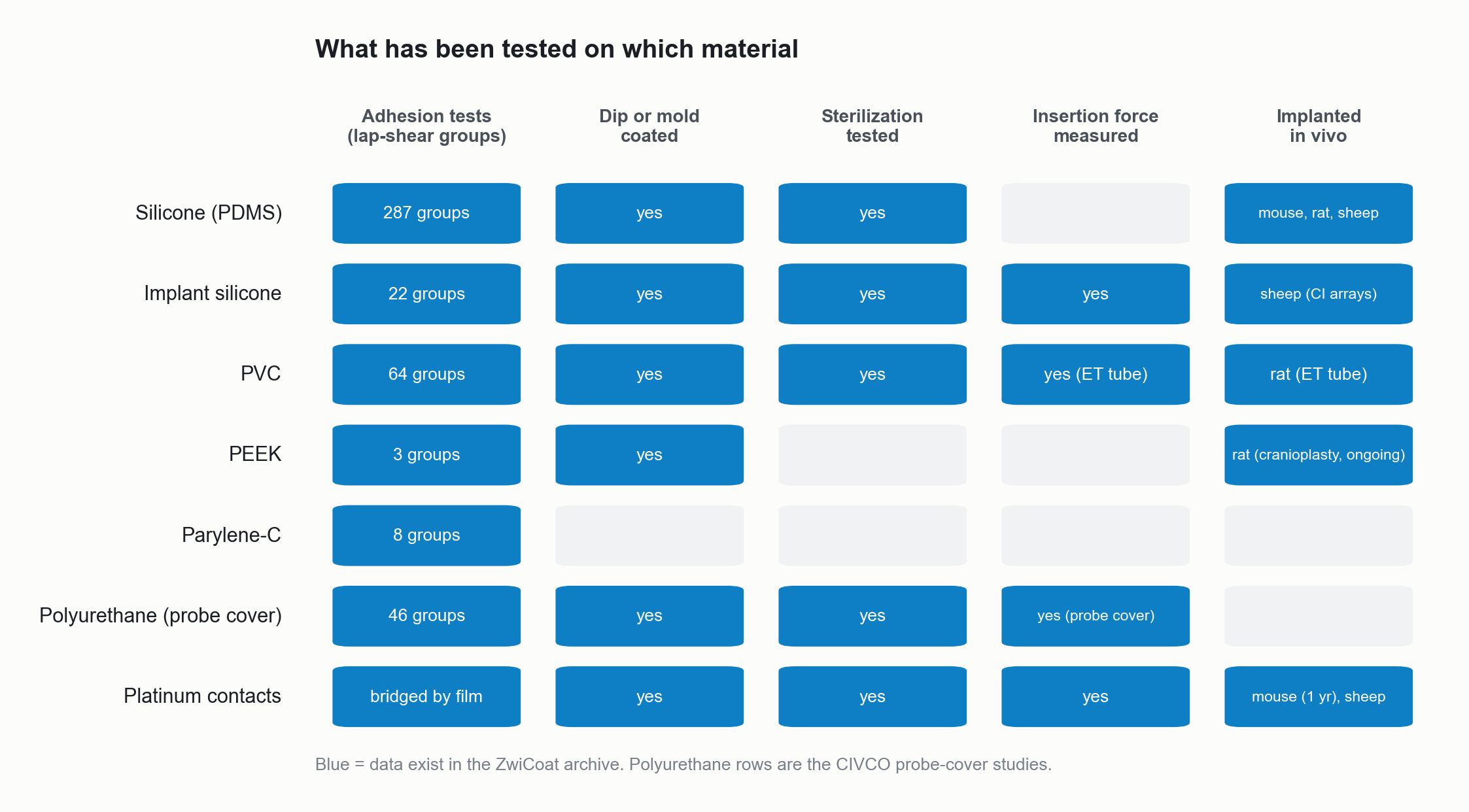
Evidence matrix: substrates versus the kinds of test on record. Blue means data exist in the ZwiCoat archive; polyurethane is the CIVCO probe cover.
Source: ZwiCoat Lap-shear Master database; archived experiment reports; published studies. Adhesion on silicone is published (Leigh 2019); the other cells are internal ZwiCoat tests.
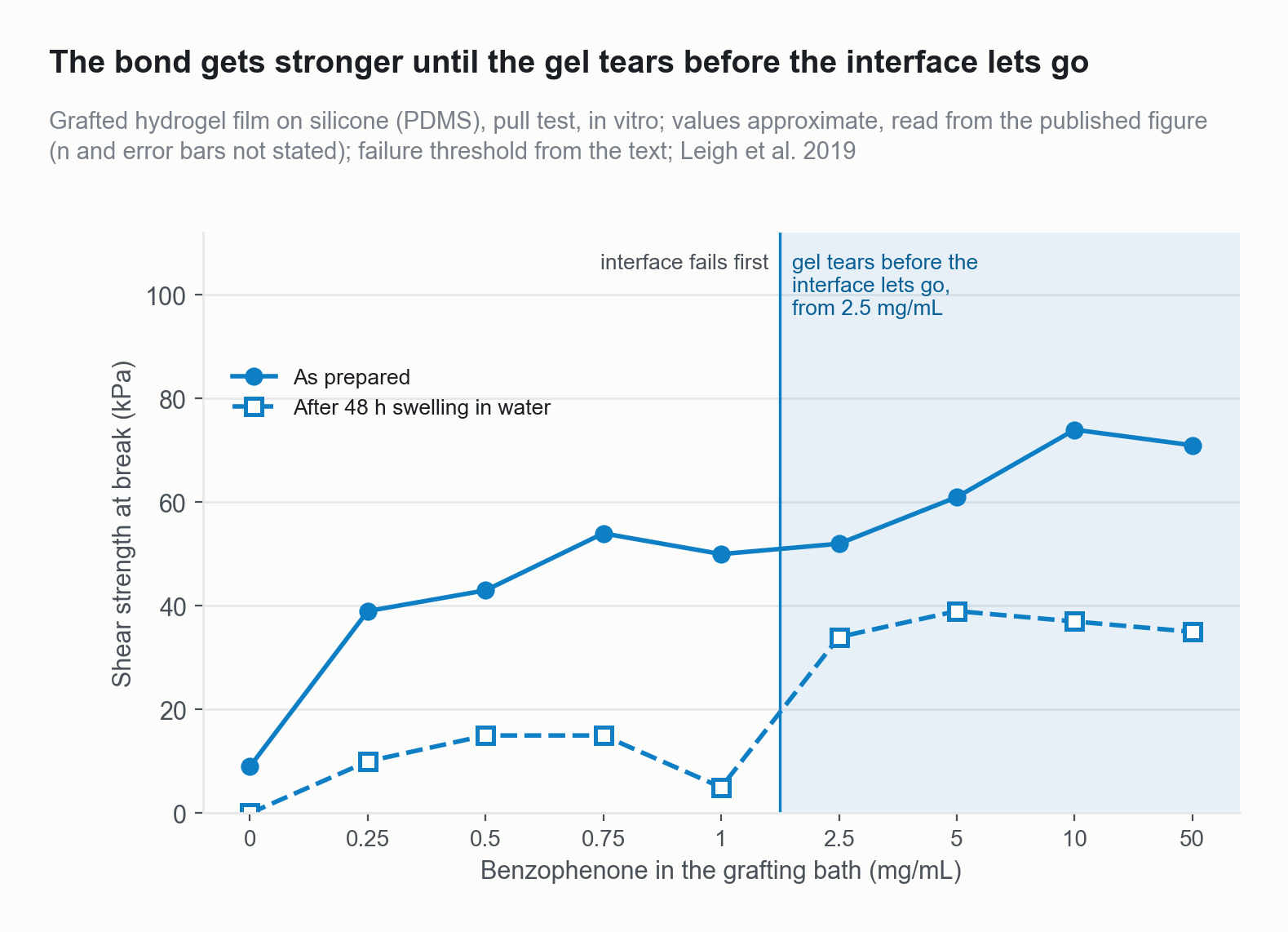
Shear bond strength of the zwitterionic film on silicone rises with benzophenone grafting agent until failure moves from the silicone interface into the gel itself, at 2.5 mg/mL.
Source: Leigh BL, Cheng E, Xu L, Derk A, Hansen MR, Guymon CA. Langmuir 2019;35(4):1100-1110, Fig 6 (values approximate, read from the published figure and converted from N/m2 x 10^4 to kPa; failure thresholds from the text, 2.5 mg/mL for SBMA and 5 mg/mL for CBMA). doi:10.1021/acs.langmuir.8b00838
Process
One UV step, on a jig or in a mold.
We coat by dip coating with an automated jig. For full encapsulation and curved arrays, we use overmolding and printed molds.
Thickness is a dial: the process runs from a few micrometres to 100 micrometres or more, set by cure time and formulation.
In the published work, the film on silicone was about 7 micrometres thick (Leigh 2019).
Process settings are tuned on your parts during the feasibility round.
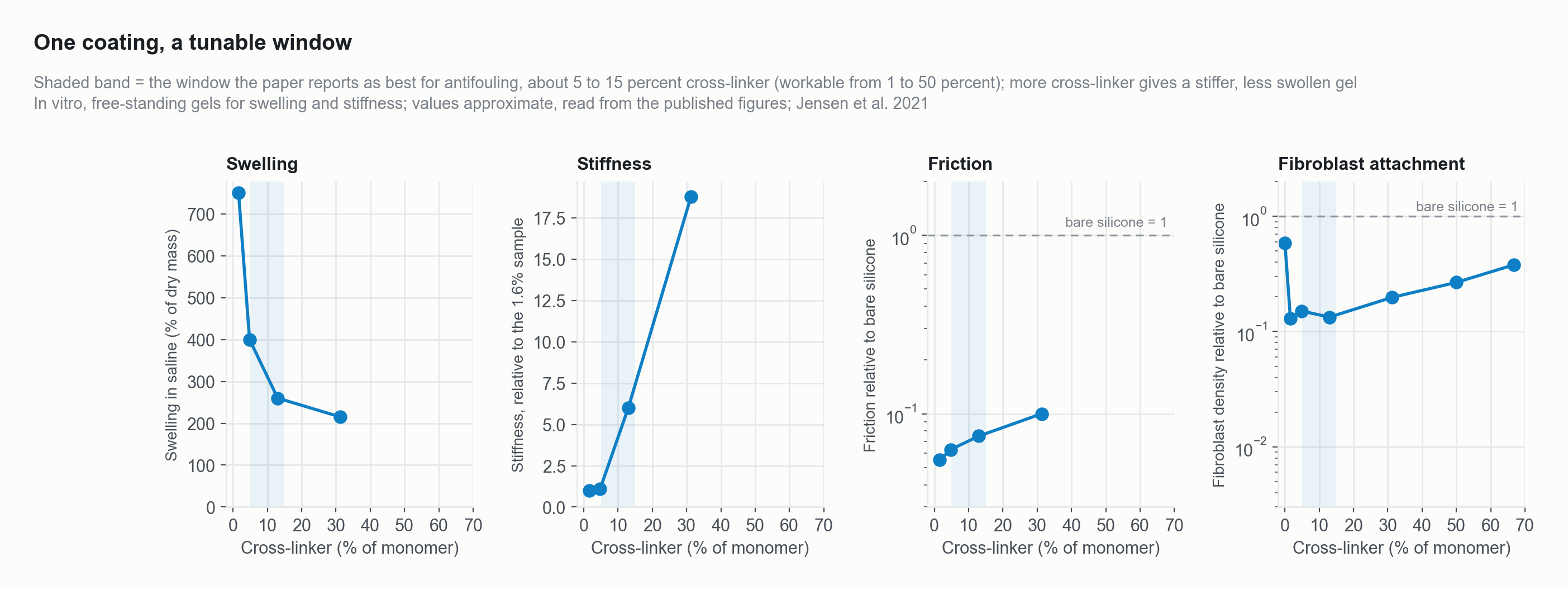
For the coating, more cross-linker makes the gel stiffer and less swollen, while protein, cell and friction benefits are strongest at about 5 to 15 percent cross-linker.
Source: Jensen MJ, Peel A, Horne R, Chamberlain J, Xu L, Hansen MR, Guymon CA. ACS Biomaterials Science and Engineering 2021;7(9):4494-4502, Figs 3G, 4A, 4B, 5B (SBMA series; values approximate, read from the published figures; stiffness shown relative to the lowest cross-linker, baseline implied by the text, 50-fold rise; the 5 to 15 percent window is stated in the text). doi:10.1021/acsbiomaterials.1c00852
 Process video: coming
The process, on video
The part is dipped into the monomer solution, then moved under UV light. One UV step grafts the film and crosslinks it.
Compared with other coatings
A water shell that stays, with no drug to run out.
| Property | Hydrophilic | Biocidal or drug-eluting | ZwiGuard |
|---|---|---|---|
| Mechanism | Lowers friction by holding water at the surface. | Releases or presents an agent that kills or slows microbes. | Binds a tight shell of water that proteins, cells and bacteria cannot displace. |
| Durability | FDA has documented peeling, flaking and shedding of lubricious coatings on intravascular devices. | A finite reservoir: in the CATHETER trial, silver alloy catheters had 12.5 percent symptomatic urinary infection and standard catheters 12.6 percent. | Covalently grafted and crosslinked, and intact after one year in mice. |
| Drug content | Not biocidal. | Resistance and hypersensitivity are concerns. | Drug-free and non-biocidal, so nothing elutes and nothing runs out. |
| Regulatory note | A coating on the device. | Antimicrobial agents bring added FDA testing and labeling. | No antimicrobial agent, so no antimicrobial-agent data are required. |
Sources: FDA guidance on lubricious coatings, 2019; Pickard et al. 2012, Lancet 380:1927 (CATHETER trial, 7,102 adults); FDA draft guidance on antimicrobial agents in 510(k)s, 2007; Horne et al. 2023, Acta Biomaterialia 166:212.
Regulatory
The partner files. ZwiCoat supports.
A coated device usually needs a new 510(k), or a PMA supplement for a PMA device.
Our Device Master File holds the formulation, process and safety data. FDA reviews it confidentially, and each submission incorporates it by reference.
We are building an ISO 13485 quality system under our NIH Phase II program.
Zwitterionic surfaces have been cleared before: a PICC and a series of Foley catheters (FDA 510(k) summaries K113225; K192034, K221625, K222118, K233013).
Performance claims rest on bench data. Clinical claims need clinical data. We make no clinical claim.
References (11)
- Zhang L, Cao Z, Bai T, et al. Zwitterionic hydrogels implanted in mice resist the foreign-body reaction. Nat Biotechnol. 2013;31(6):553-556.
- Horne R, Ben-Shlomo N, Jensen M, et al. Reducing the foreign body response on human cochlear implants and their materials in vivo with photografted zwitterionic hydrogel coatings. Acta Biomater. 2023;166:212-223.
- Peel A, Bennion D, Horne R, Hansen MR, Guymon CA. Photografted zwitterionic hydrogel coating durability for reduced foreign body response to cochlear implants. ACS Appl Bio Mater. 2024;7:3124-3135.
- Ben-Shlomo N, Peel A, Etler C, et al. Development of zwitterionic hydrogel thin film coatings of cochlear implant electrode arrays that reduce intracochlear inflammation and electrode impedance. Hear Res. 2026;474:109606.
- Shen N, Cheng E, Whitley JW, et al. Photograftable zwitterionic coatings prevent Staphylococcus aureus and Staphylococcus epidermidis adhesion to PDMS surfaces. ACS Appl Bio Mater. 2021;4(2):1283-1293.
- Bennion DM, Horne R, Peel A, et al. Zwitterionic photografted coatings of cochlear implant biomaterials reduce friction and insertion forces. Otol Neurotol. 2021;42(10):1476-1483.
- Leigh BL, Cheng E, Xu L, Derk A, Hansen MR, Guymon CA. Antifouling photograftable zwitterionic coatings on PDMS substrates. Langmuir. 2019;35:1100-1110.
- Pickard R, Lam T, MacLennan G, et al. Antimicrobial catheters for reduction of symptomatic urinary tract infection in adults requiring short-term catheterisation in hospital (CATHETER). Lancet. 2012;380:1927-1935.
- FDA. Intravascular Catheters, Wires, and Delivery Systems with Lubricious Coatings: Labeling Considerations. Guidance for Industry and FDA Staff. October 10, 2019.
- FDA. Draft guidance: premarket notification [510(k)] submissions for medical devices that include antimicrobial agents. Fed Regist. 2007;72(138):39630-39631.
- FDA. 510(k) summaries K113225; K192034, K221625, K222118, K233013. accessdata.fda.gov.
Bring us a device with a fouling, scar or friction problem.
We coat it free, with no cap on quantity, and return it with matched uncoated controls and data.